
The history of ancient Egypt can be remembered by holding of your first three fingers says our guide, Osman! First finger is the Old Kingdom, the space in between fingers is the first intermediate period, (a period of confusion where 70 different kings reigned for a short time each), the next finger is the Middle Kingdom, the space in between is the period of foreign rule (Hyksos) followed on the third finger by the New Kingdom.
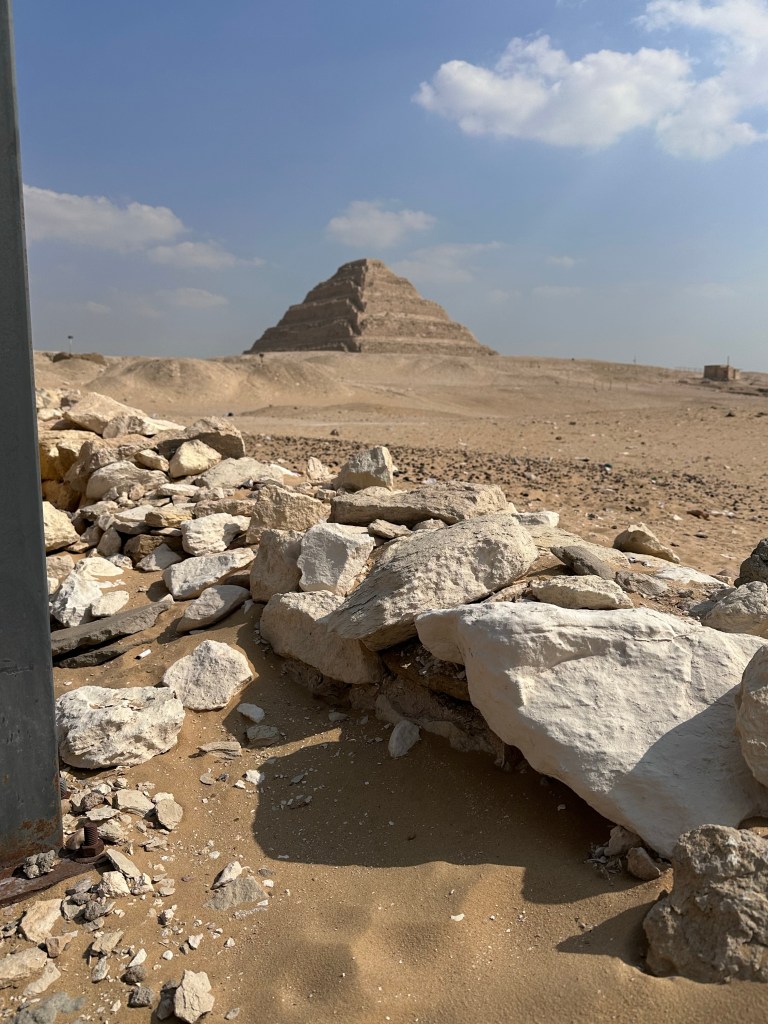
I will begin with the Old Kingdom, we visited Old Kingdom sites at the beginning and end of our trip, so talking about it all together helps me keep this straight! The Old Kingdom Kings ruled from Memphis. The areas of Saqqara and Giza used for final resting place of these kings were not far away the capital.
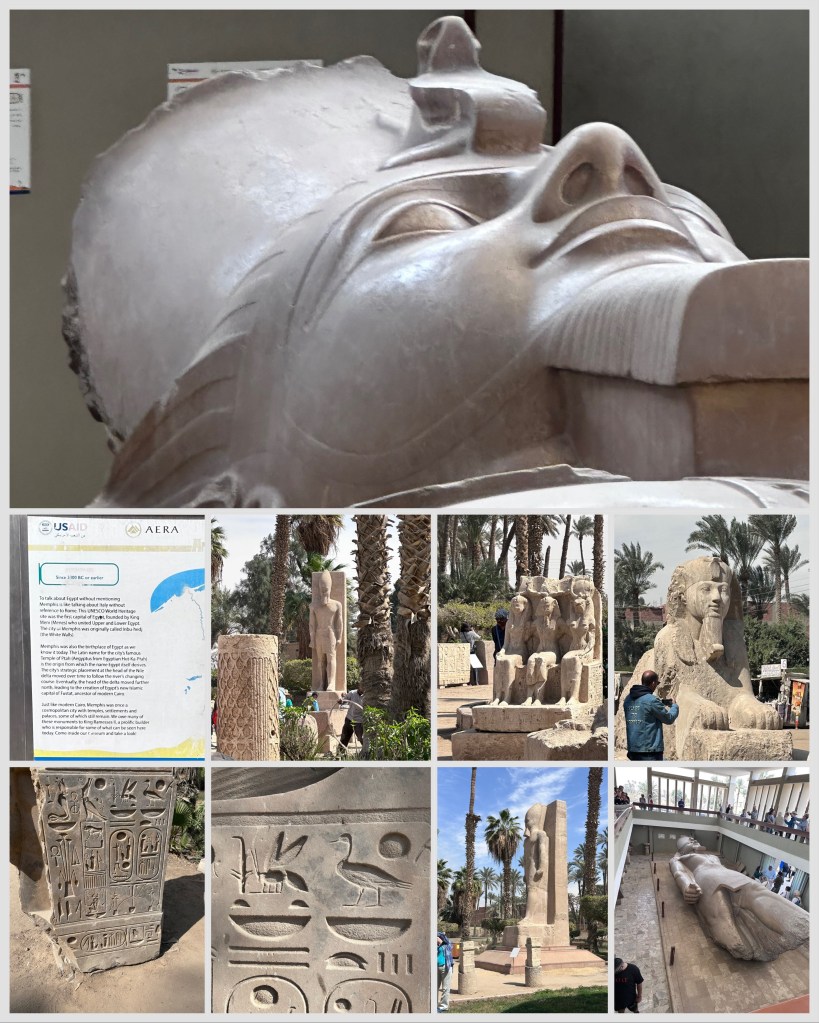
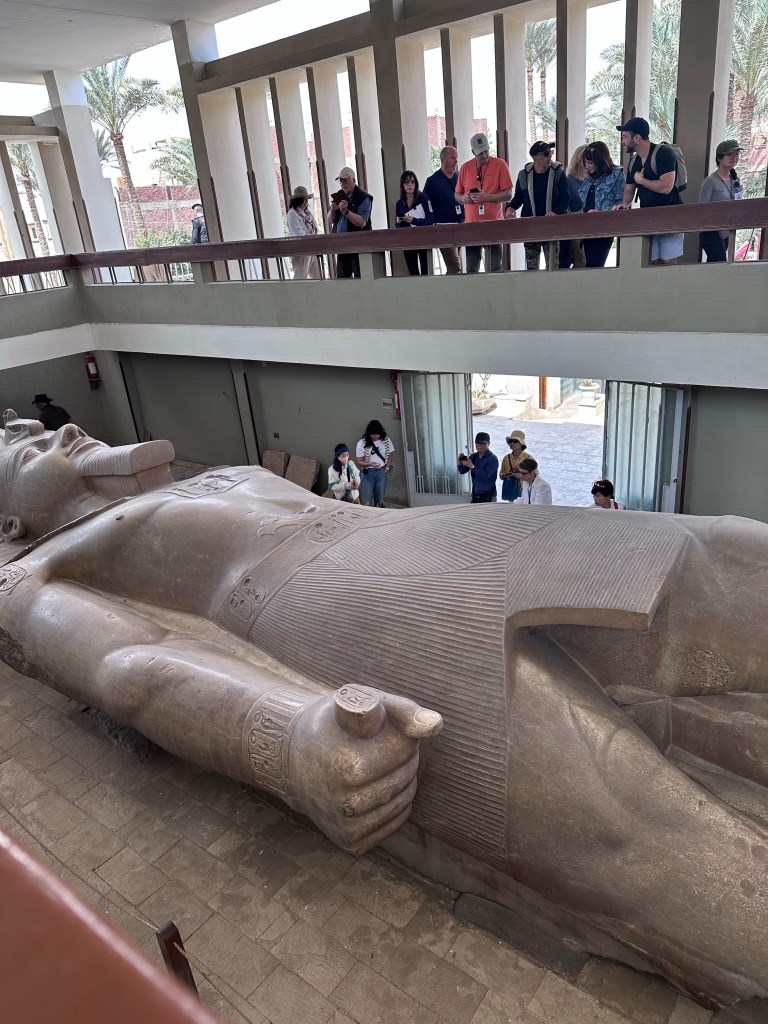
The first and last photos above show the broken Colossal statue of Rameses II carved out of a single block of Limestone. The alabaster Sphinx is 8 meters long and weighs 8 tons. Also included are examples of stone carving instead of relief sculptures found in Old Kingdom Tombs.
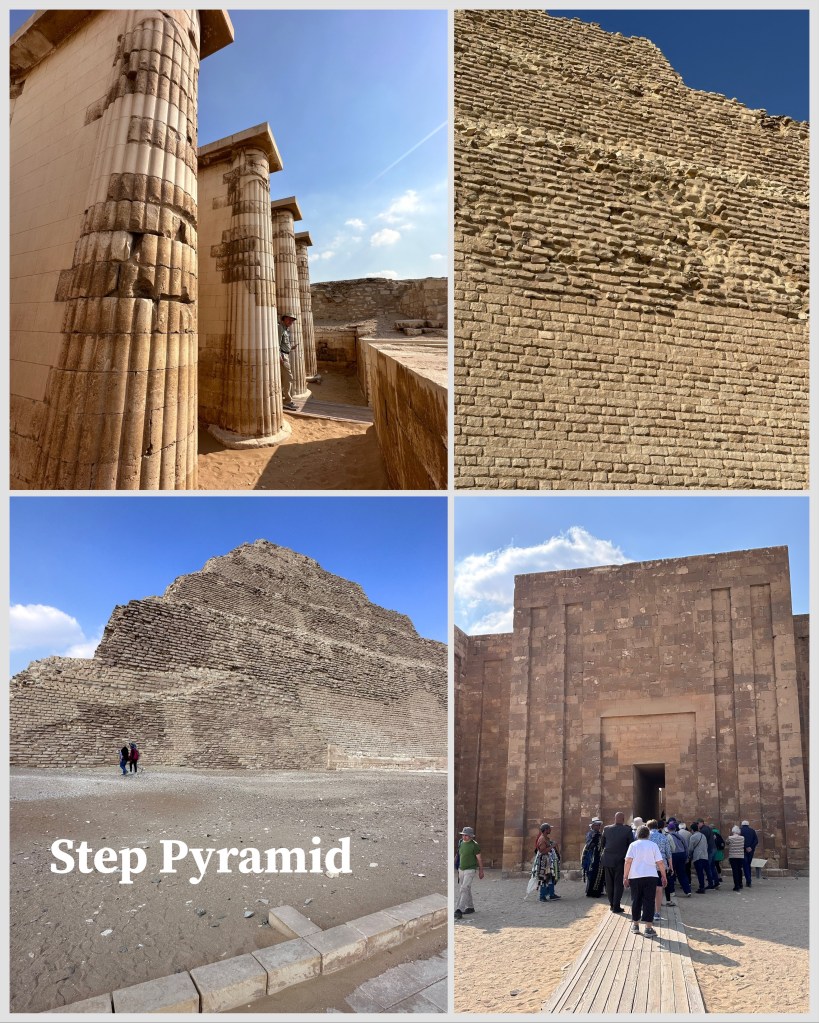
While there were kings before the Old Kingdom, they only ruled one half of Egypt. The dates for the old Kingdom begin around 2649 BC with the unification of upper and lower Egypt under Sankht the first king of the Third Dynasty. The second king of Third Dynasty was Djoser who built the Step Pyramid at Saqqara. The Fourth Dynasty included Khufu, Kafre, and Menkura’s pyramids at Giza.
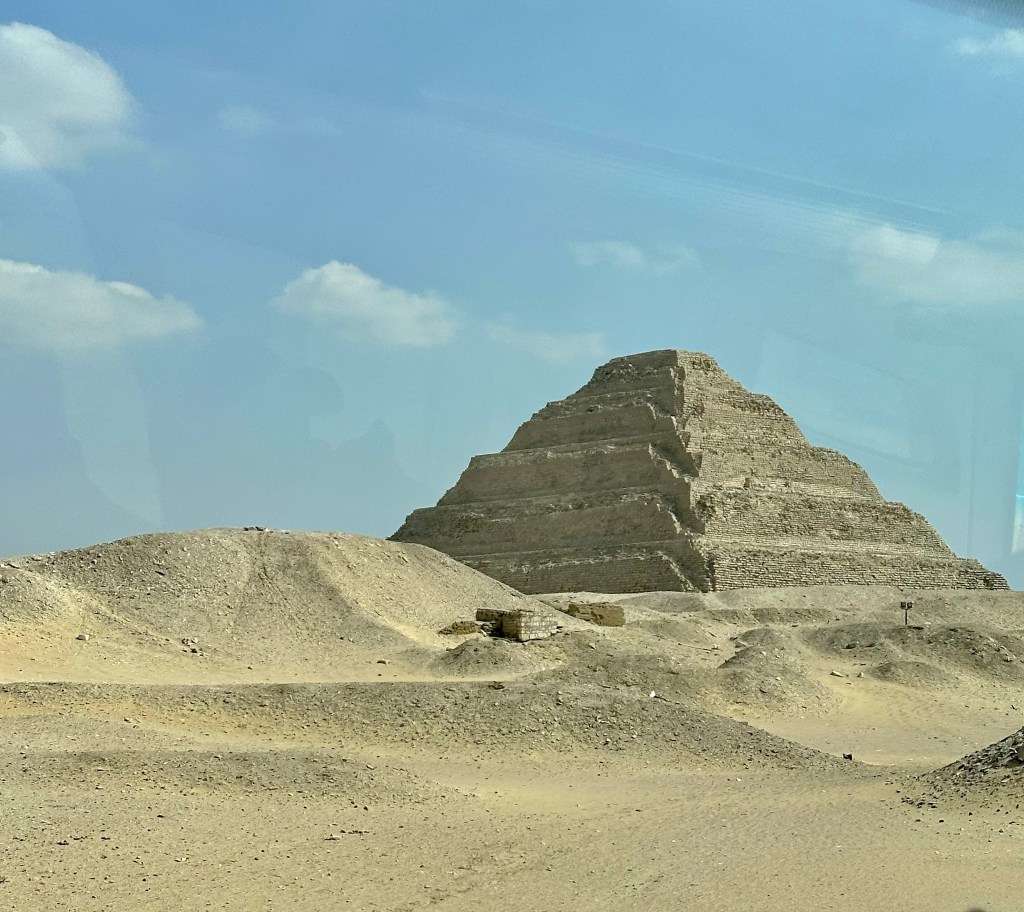
This pyramid the oldest of the Egyptian Pyramids was surrounded by a stone wall and contained 40 pillars, the first columns in history. The pyramid was designed by Djoser’s vizier, Imhotep, an architect and physician.
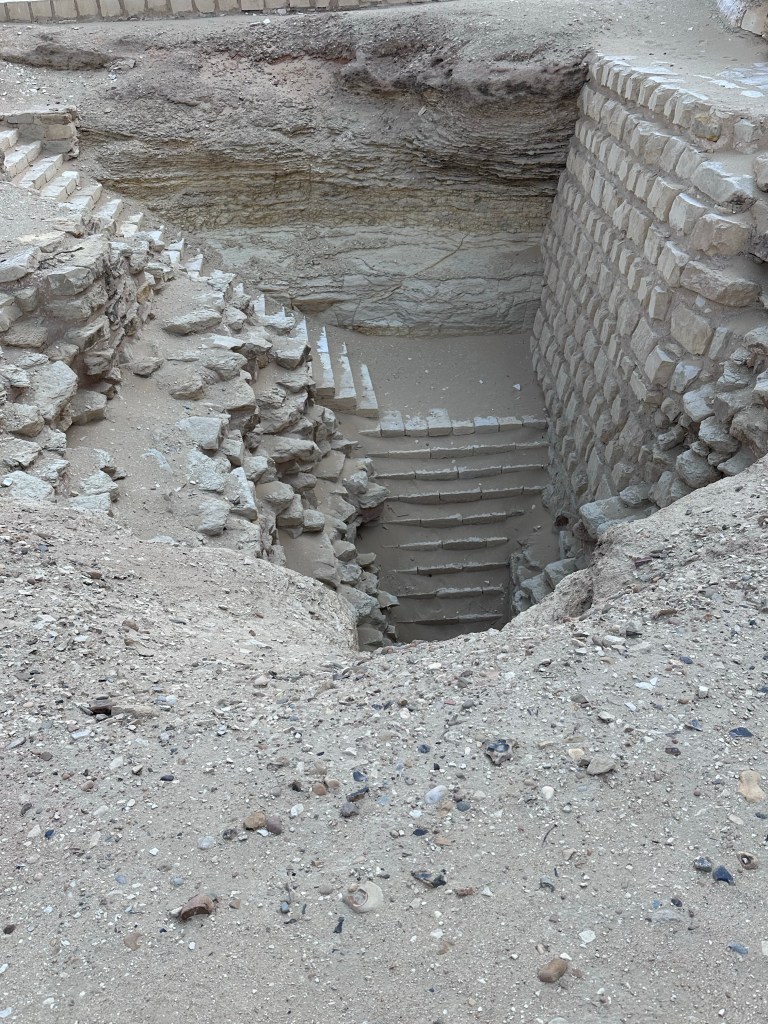
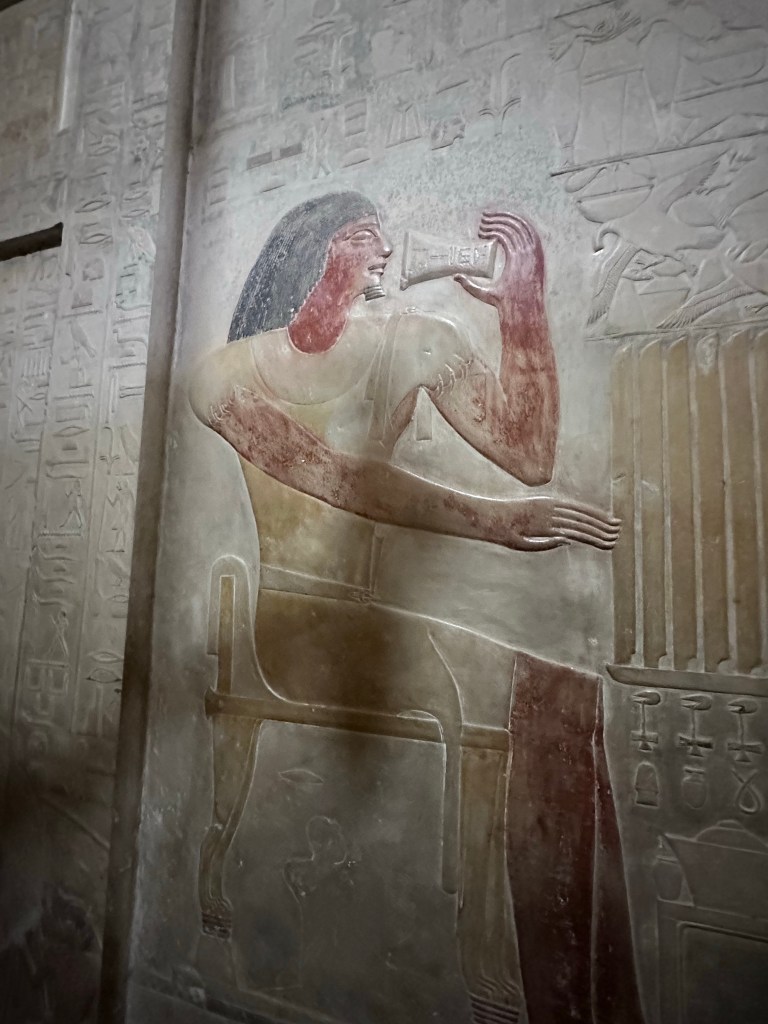
While in Saqqara, we were able to visit a mastabas tomb of Ptahhotstep II, The chief justice and vizier of king Isesi from (2414-2375BC) The two false doors, the relief work and color from 4000 plus years ago were amazing!
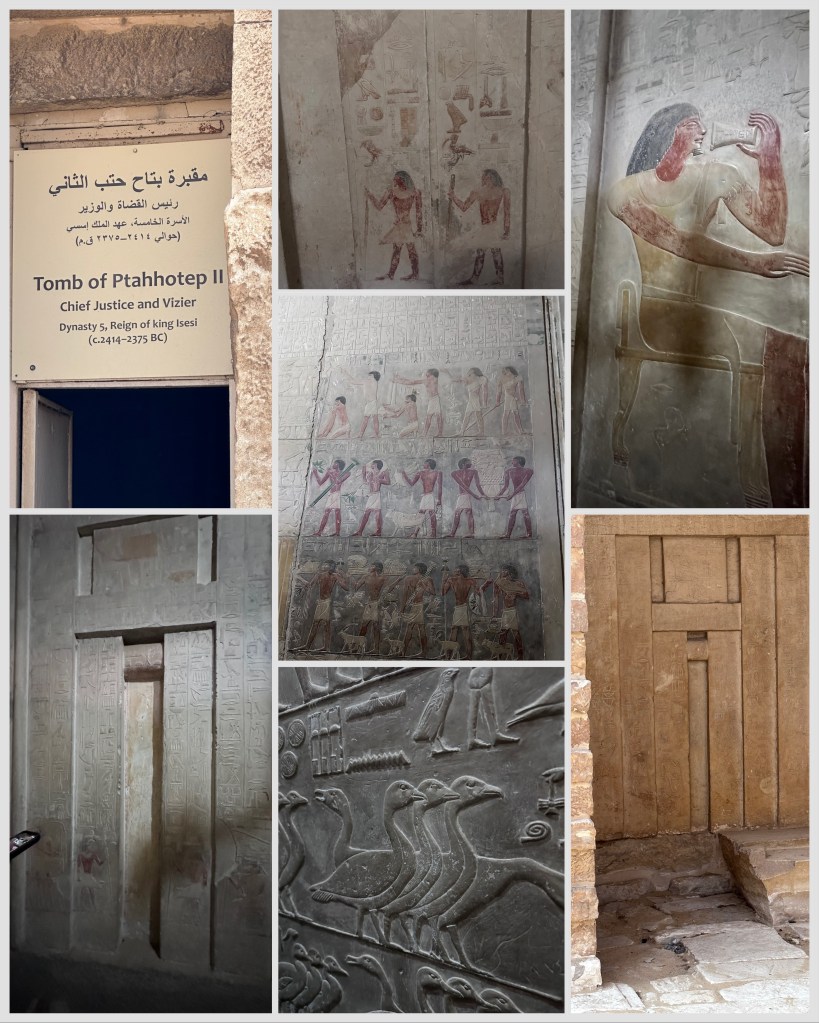
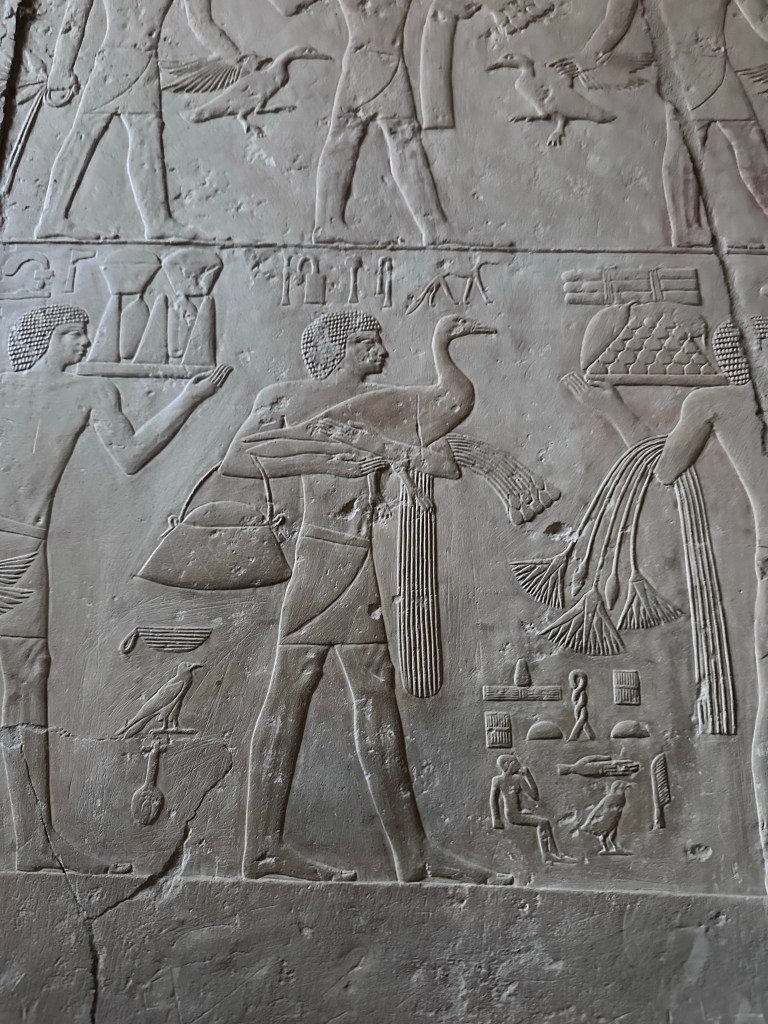
The relief work required several teams of skilled craftsmen. First came the smoothing the stone walls. Then the applying several layers of plaster, then removing part of the plaster following the artist drawings leaving the relief of the images. Finally the small details of each item was completed then painted.
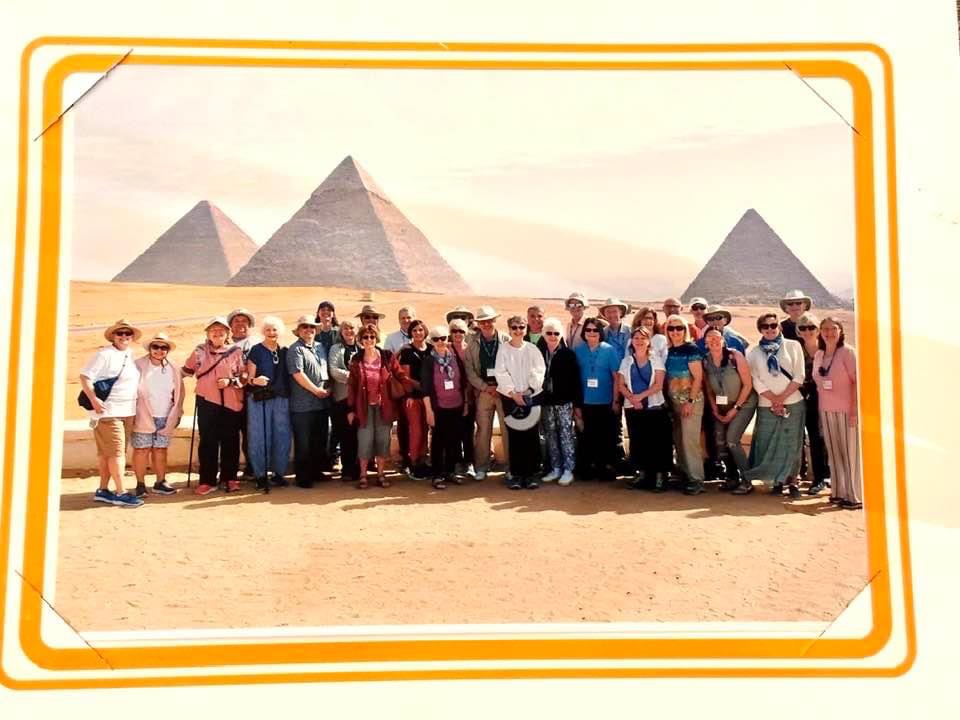
The next part of the Old Kingdom is found a few miles away at Giza. Here three large pyramids of the Old Kingdom reside.
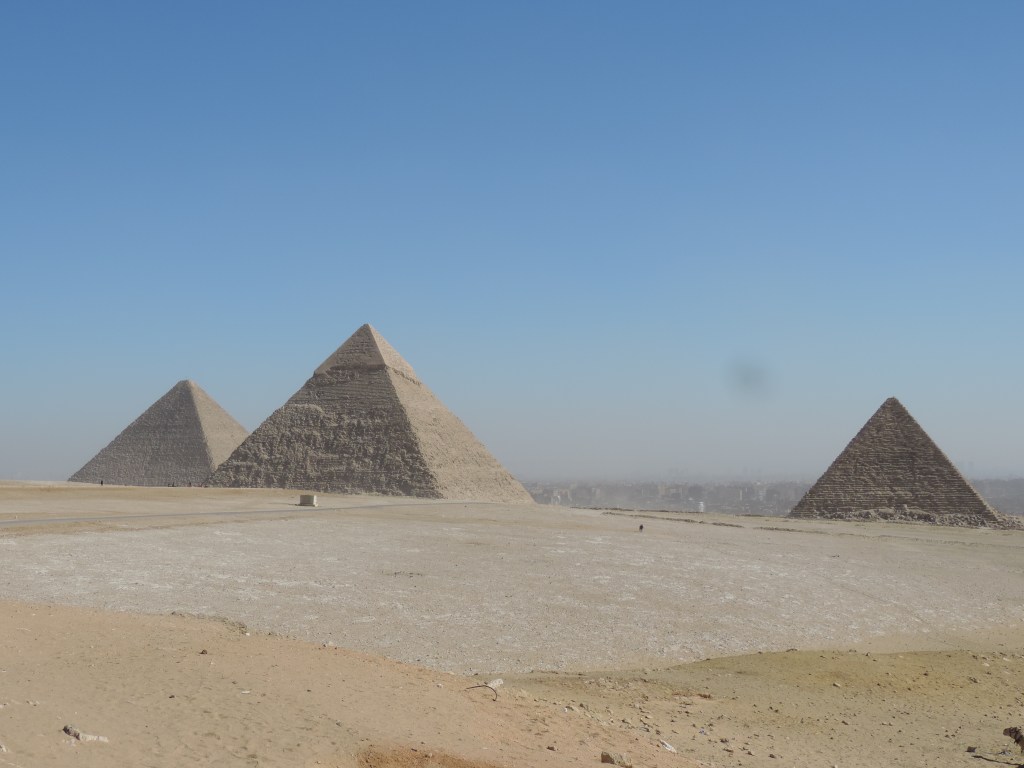
The Pyramid of Khufu, (2551-2528 BC) known as the Great Pyramid was and is one of the Seven Wonders of the Ancient World. It was the world’s tallest structure until the building of the Eiffel Tower in 1889.
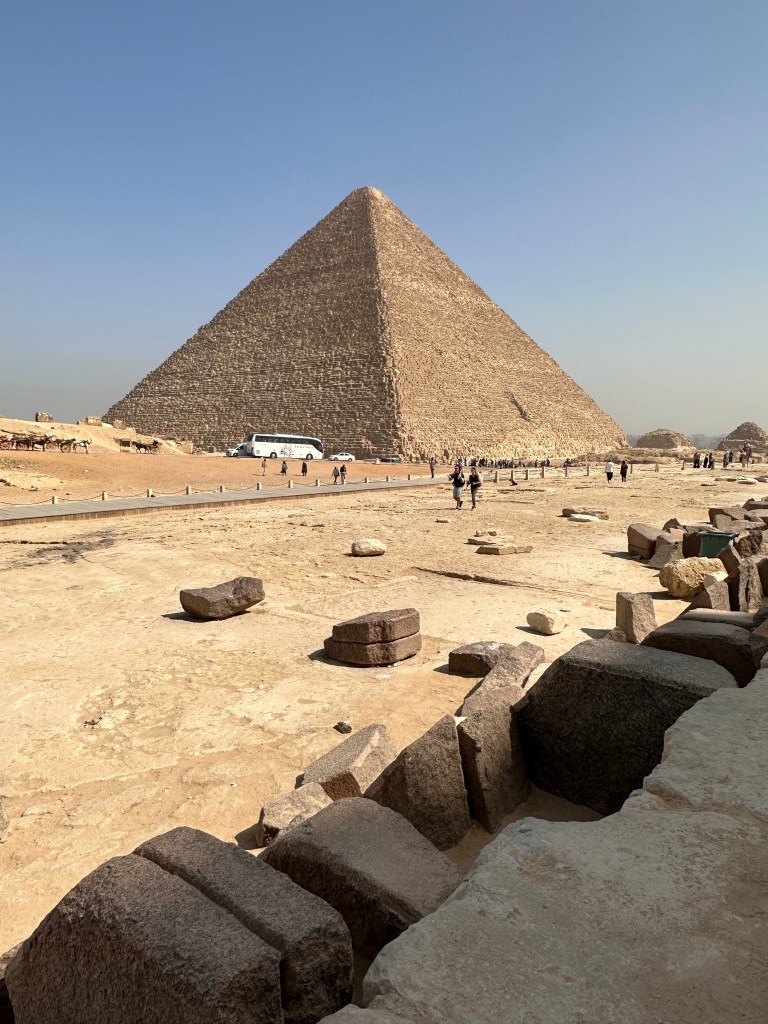
The appearance today is due to the removal of the external covering of limestone during the early Arab domination of Egypt. The top of the Pyramid of Khufu’s son Khafre still has some of this external covering and some can be seen that has fallen is at the base of the pyramid.
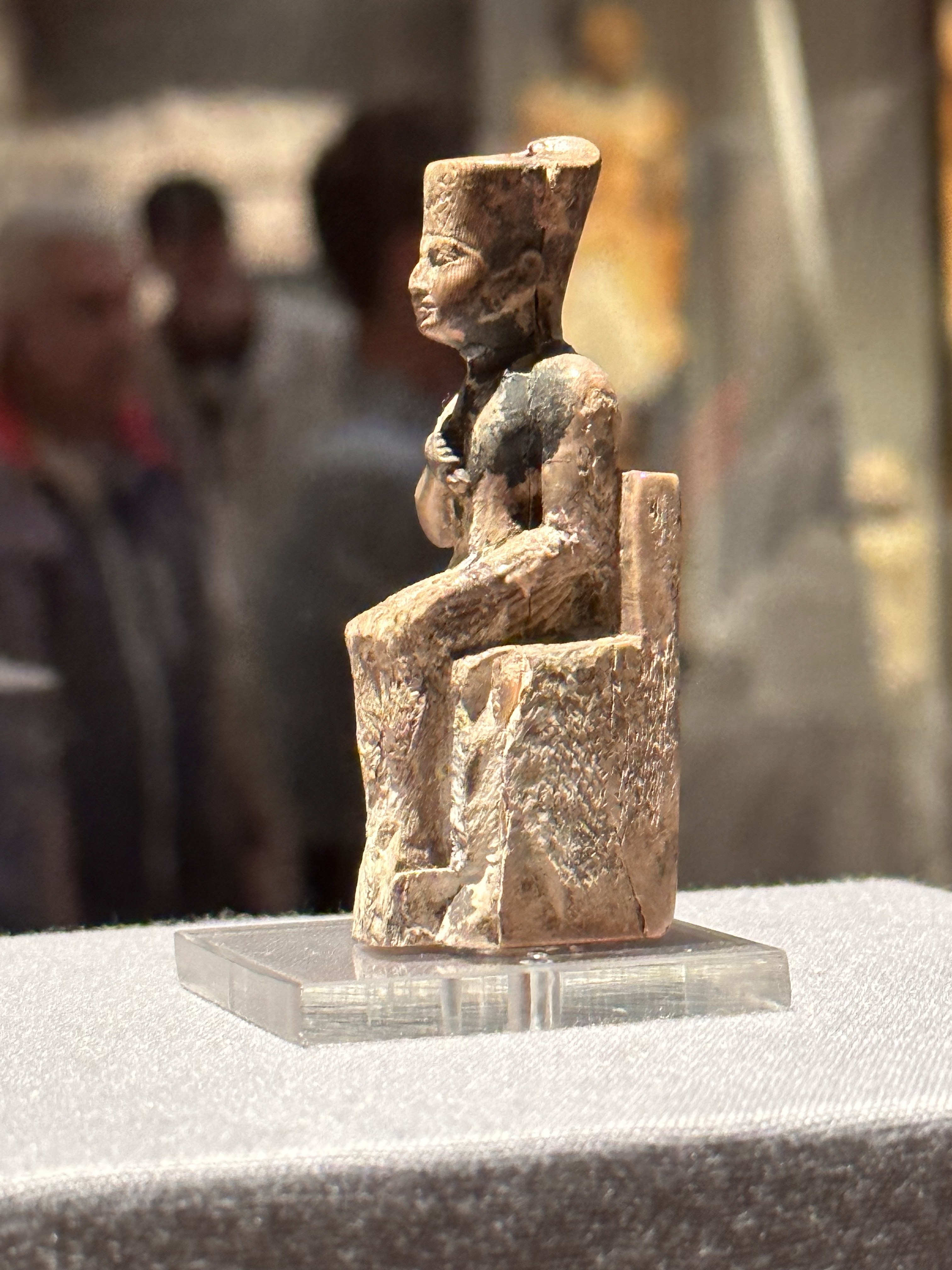
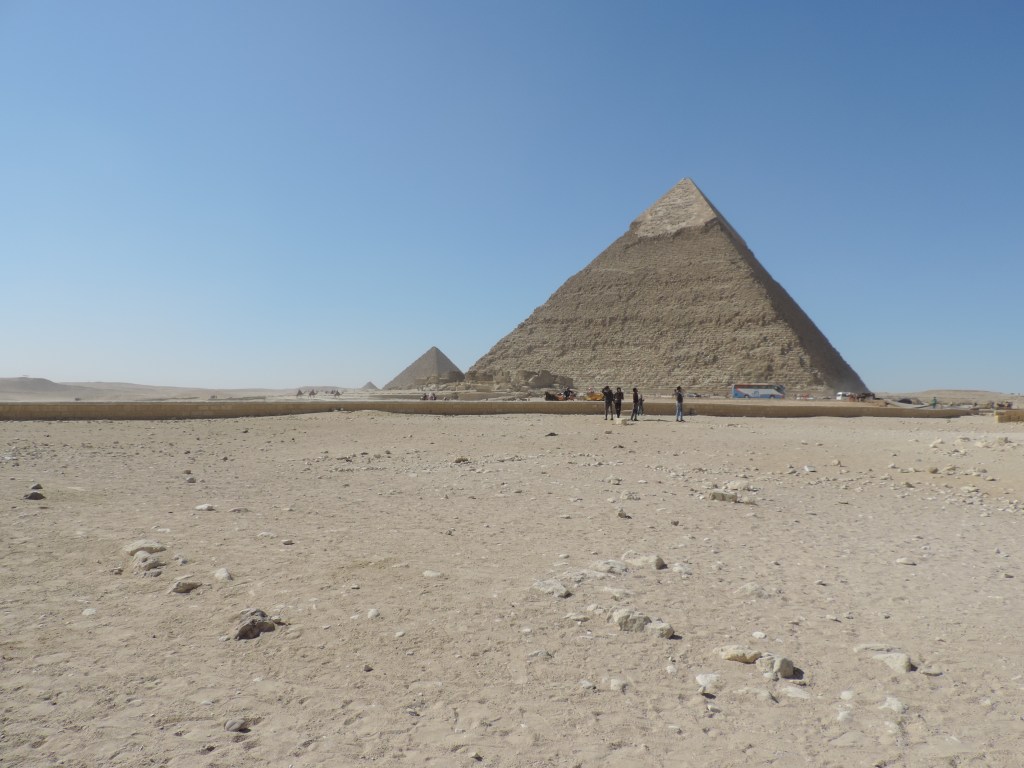
The final stop in the Giza plateau is the Sphinx. The guardian of the plateau. The face of the Sphinx is thought to be that if Khafre himself
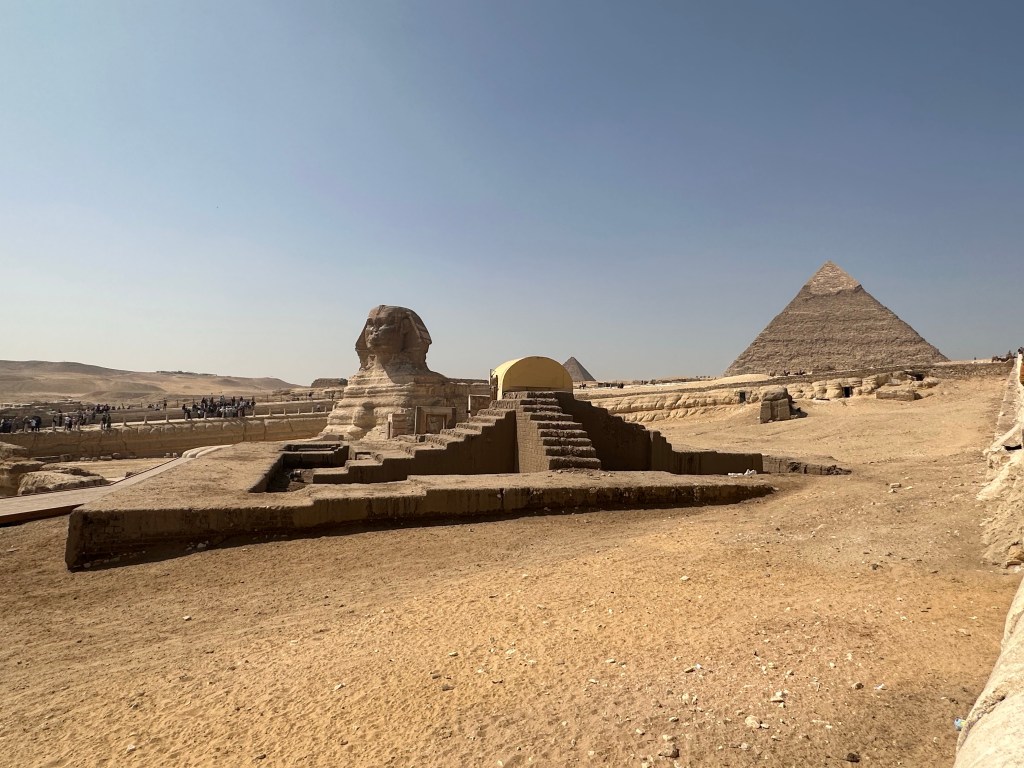
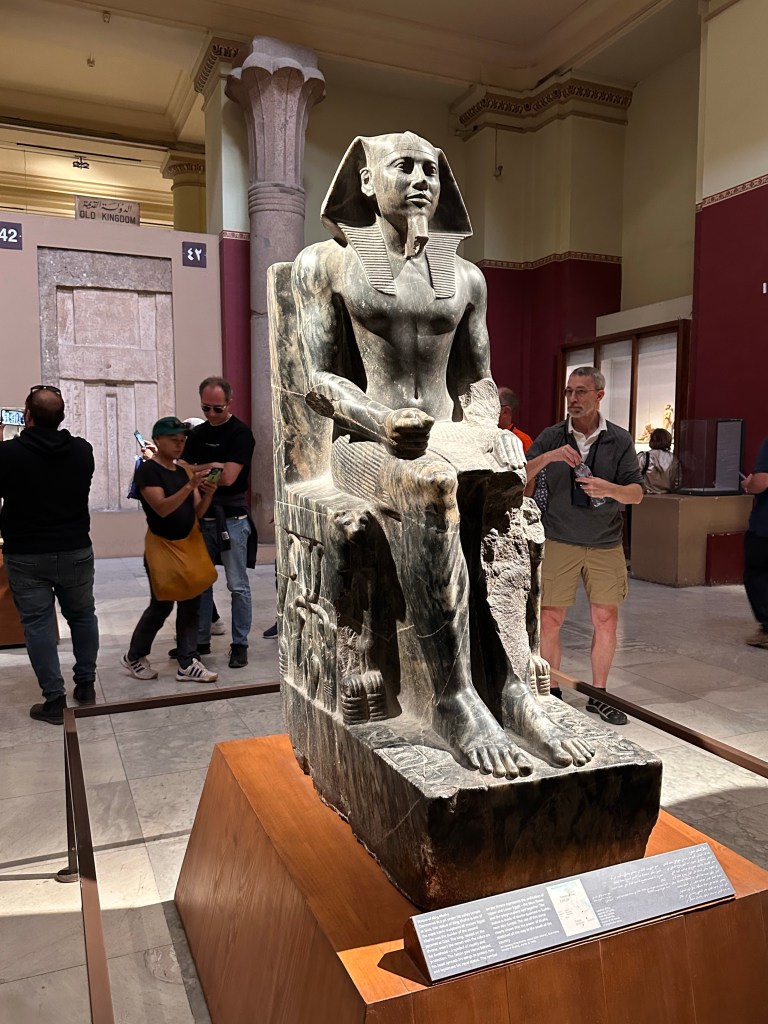
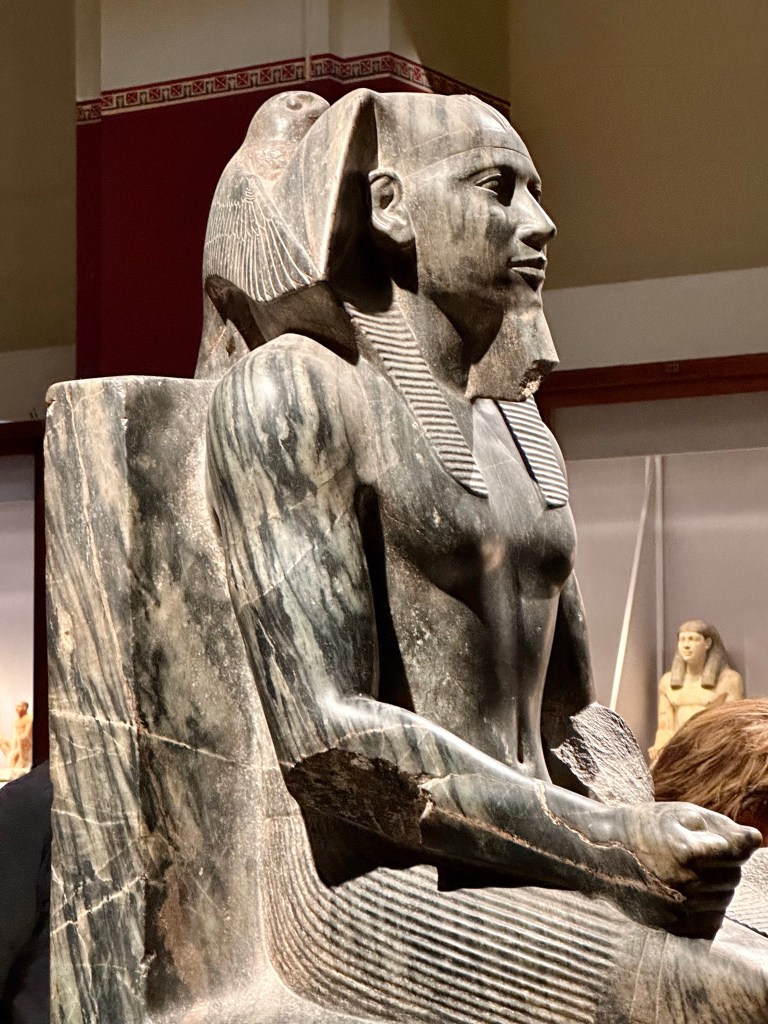
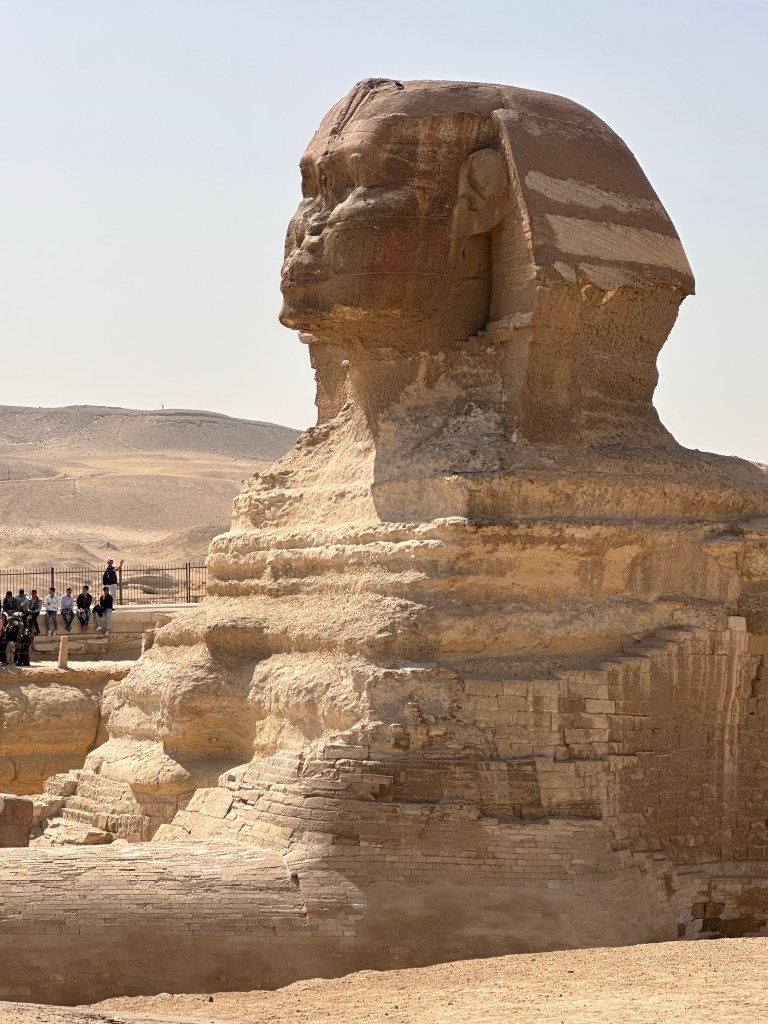
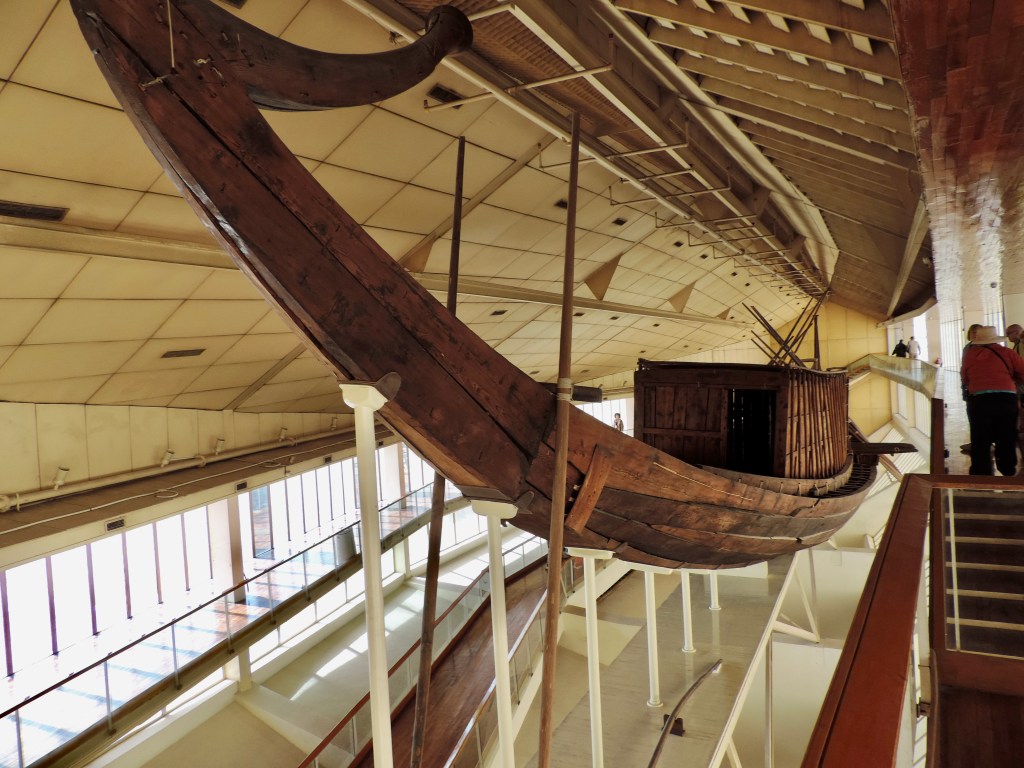
One item is missing in 2023 from the Giza Complex. The Solar Boat discovered in 1954 had been buried beside the Great Pyramid of Khufu in 2500 BC. This boat was discovered and put together with its original ropes and put into it’s own building beside the Pyramid. It is now in the Greater Egyptian Museum (Which was to open in 2014). It was there in 2019 (my last trip) so I’ve included a photo from that trip.
It is really amazing to see all these sites and realize that Abraham, Joseph, Jacob, his 11 other sons, Moses, Mariam, Aaron, walked these sandy hills and could see these sights close up! The Lord provided a sanctuary in the breadbasket of Egypt to preserve his people.
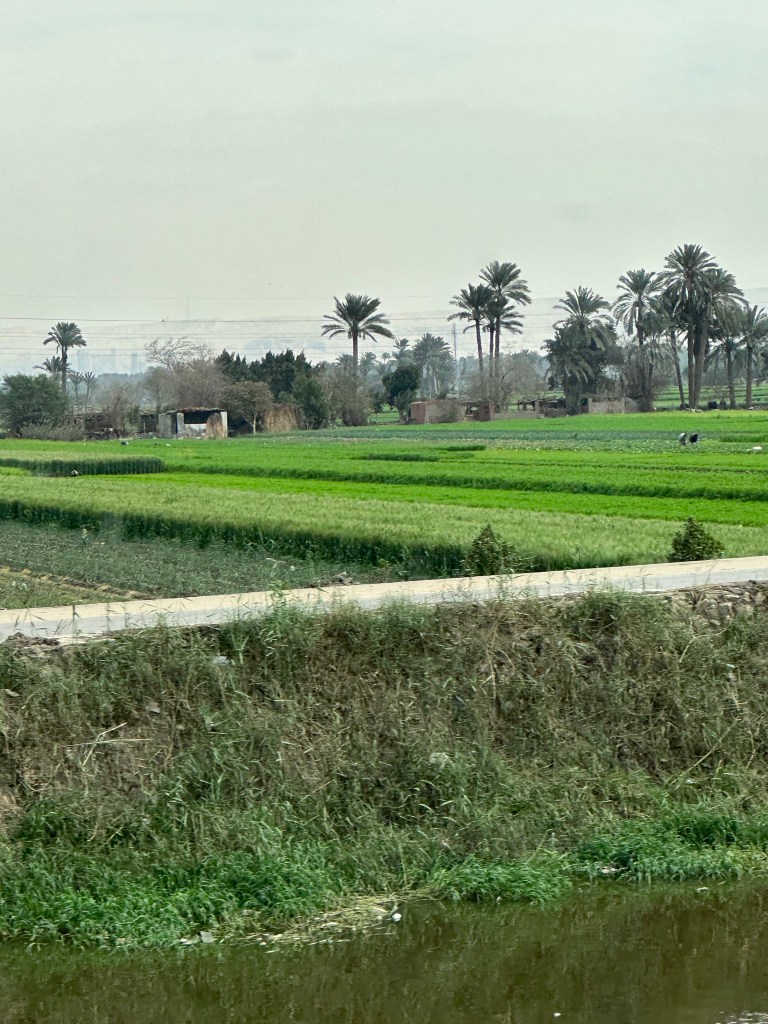
They thrived and grew into the great nation as God had promised Abraham. It is a reminder to us that in time of trouble, the Lord will provide.

 Ellen’s Travel Journal 2016-2025