
Sunday, August 31, 2025
I took so many pictures at the fortress and Castle that they were going to require a separate post.
Today we are still in Serbia and we are on land, but the Danbue River is the dividing line between Romania and Serbia. For this reason, my telephone and watch change times to Romanian time which is one hour earlier.
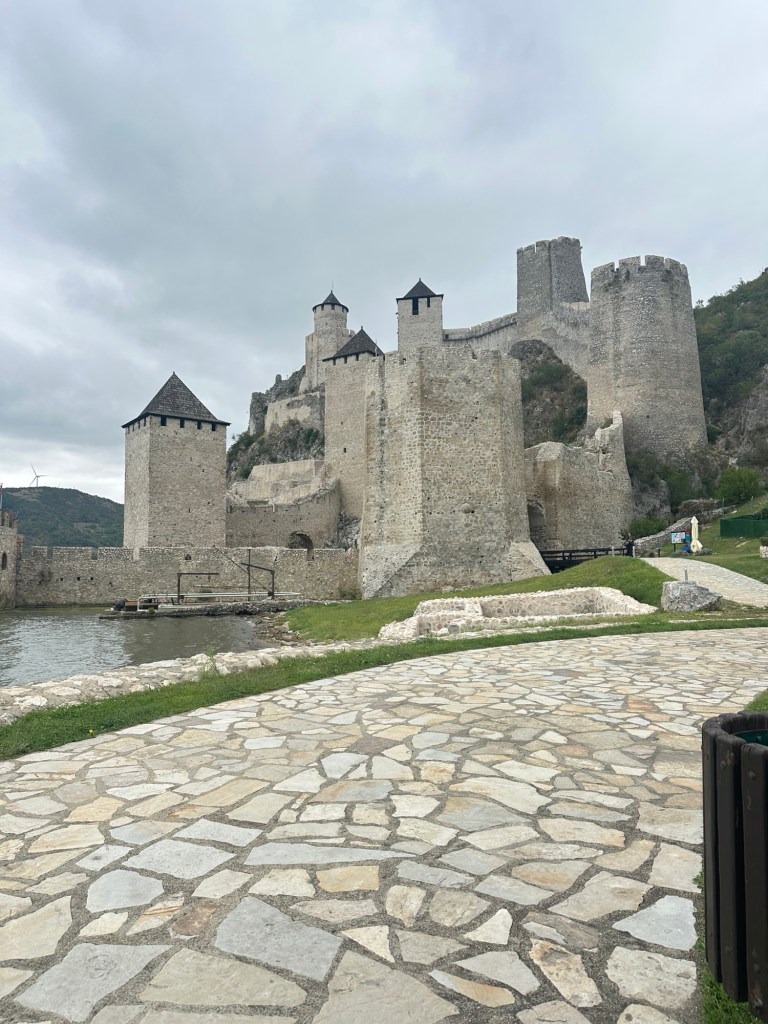
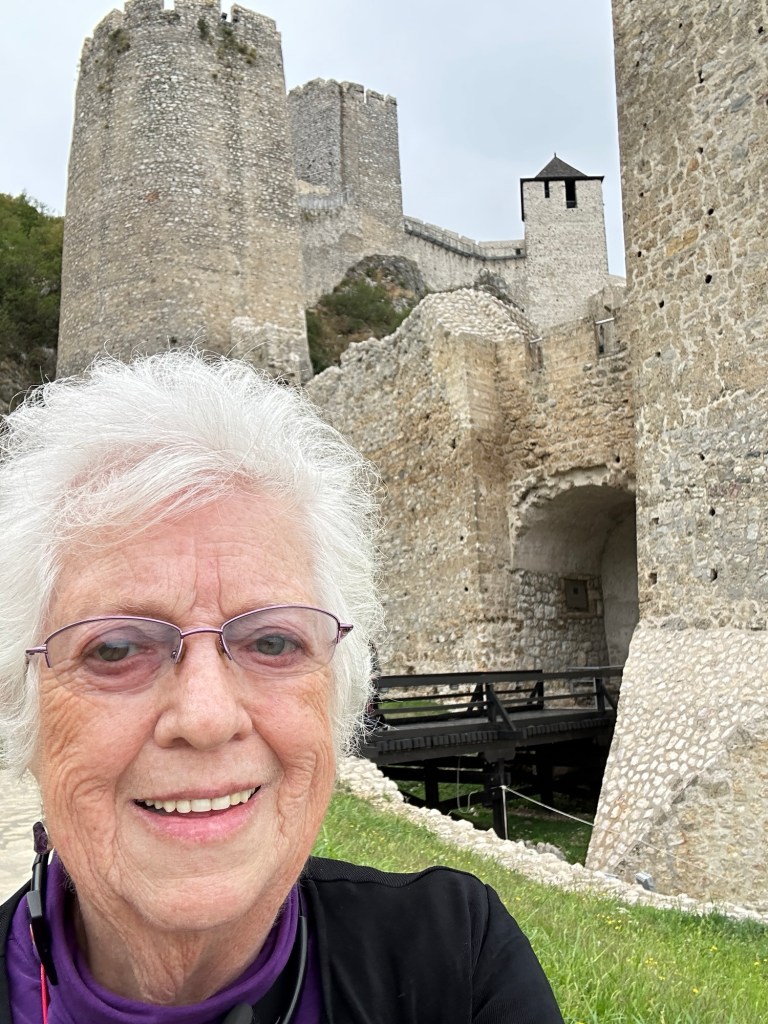
The Golubas Fortress it’s called by the locals the fortress of the doves. The fortress is built on Roman ruins, but current walls and towers date from the 14th century. Earliest reference to the fortress is in 1335.
The fortress was built to control traffic and enemies entering this section of Danube River. 
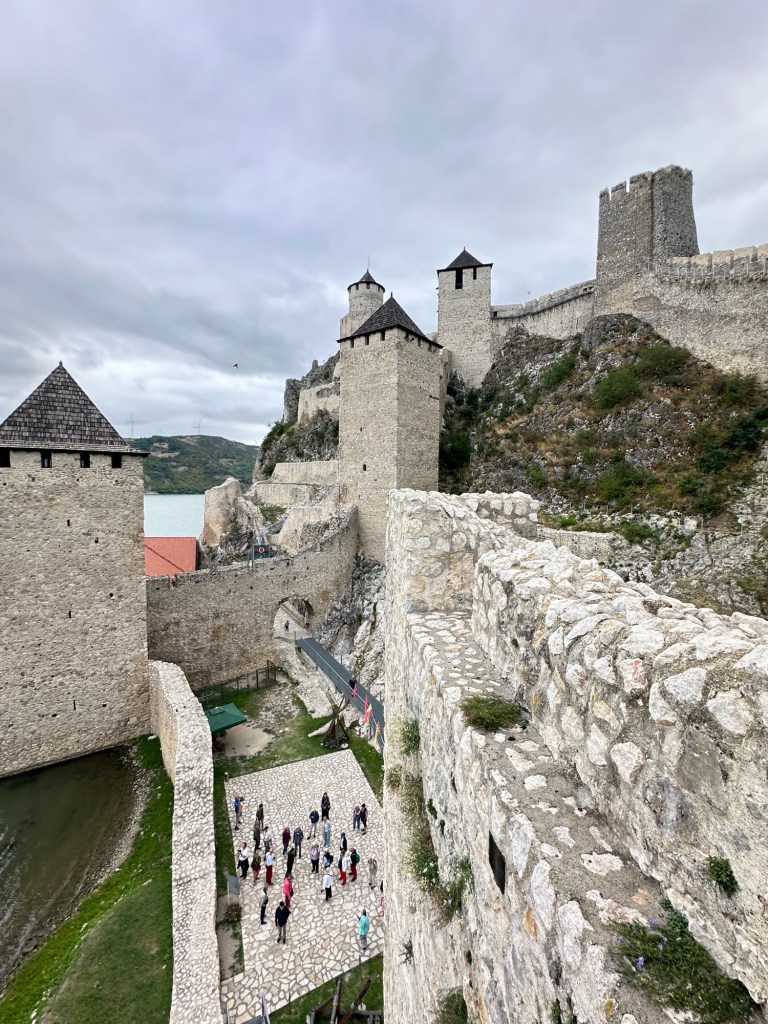
Looking down from top one of the towers, you can see the complexity of Fortress. The fortress was attacked over the centuries more than 120 times and every new conqueror built a new section into the Fortress. However, they were not connected, which meant if they lost one section of the fortress, another would be there for them to fight against the invader. (Connections now are over metal bridges from the 21st century.)
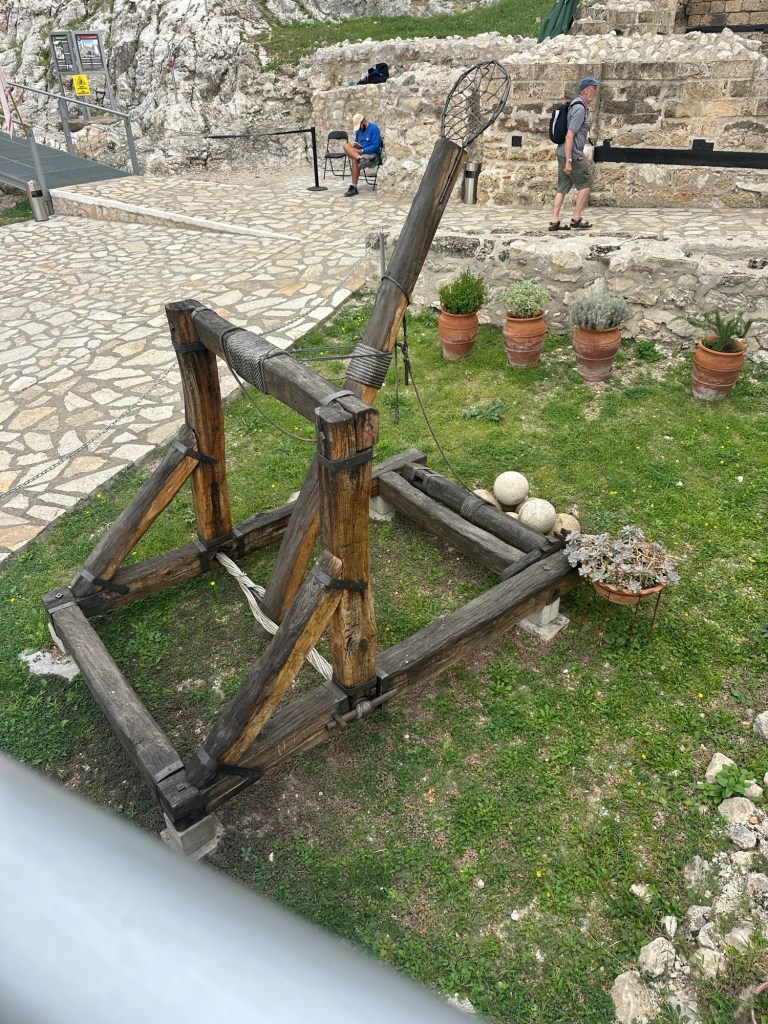
Catapults, bows and arrows were used early on later for defense. After gun power was created canons used to protect and prevent ships from going up into the Danube.


Castle

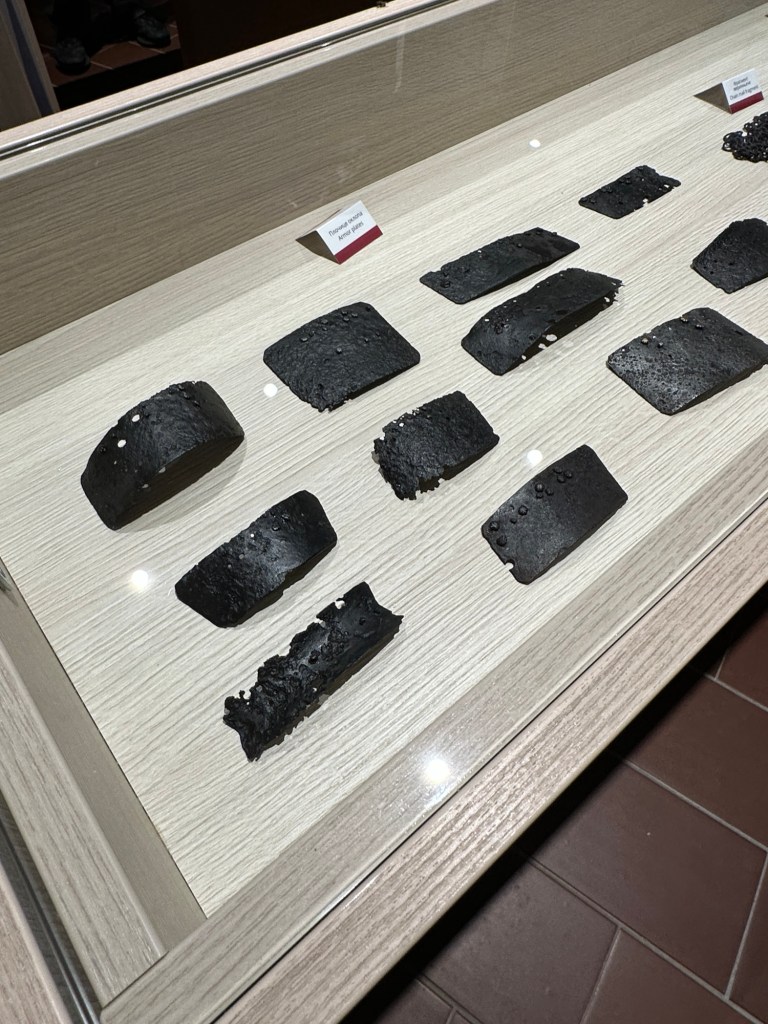
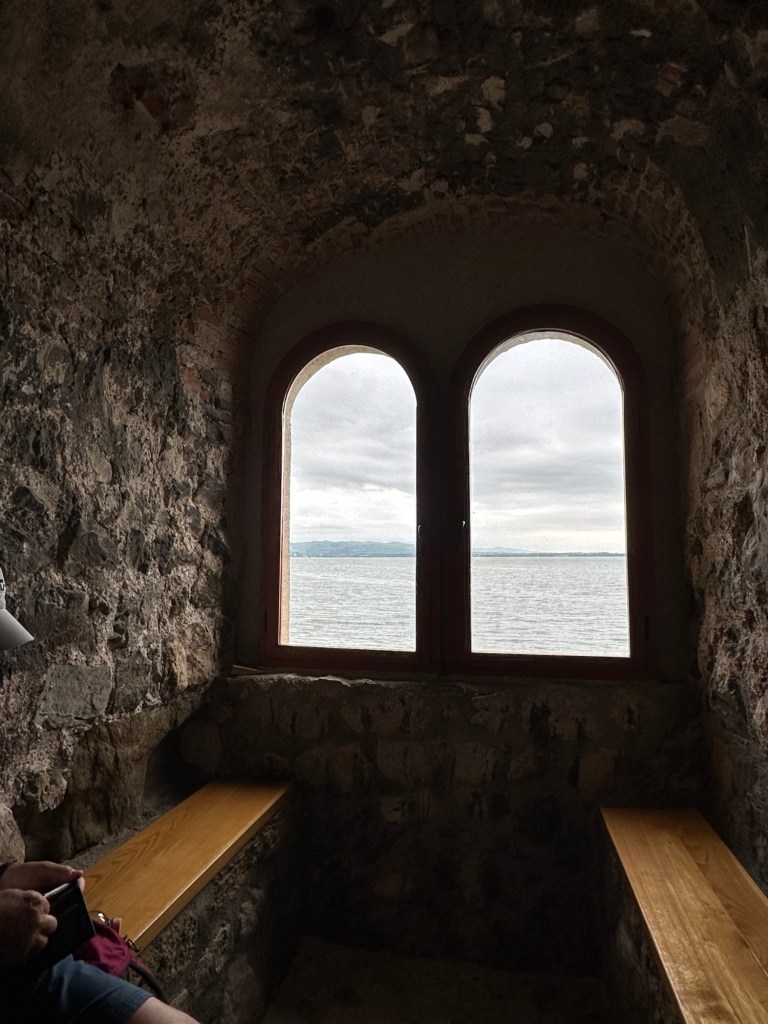
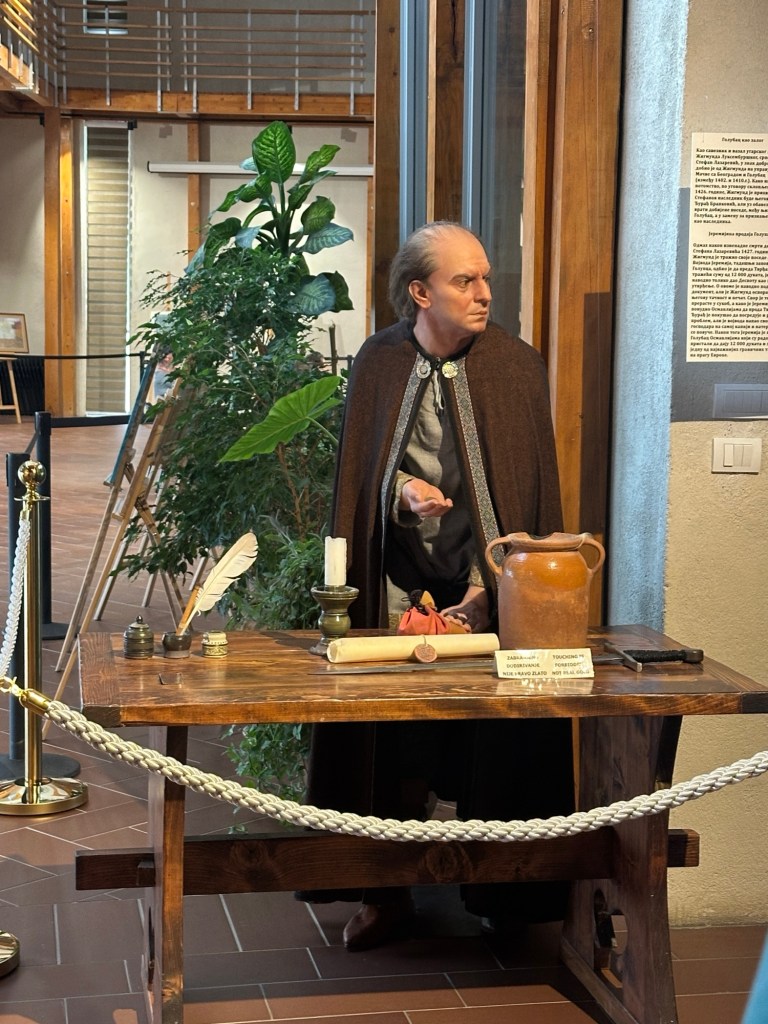
In 1425 the commander of Golubac Fortress was commanded by his king to turn the fortress over to the Hapsburg Kingdom after a battle. However he refused and said he would only do it if he was paid 12,000 gold ducats* . The Hapsburgs refused to pay, but he did find a client in the Ottoman Turks next door who were glad to pay the money to help provide a way from Turkey into the Danube.
(* a ducat: 3.5 g of 98.6 pure gold)
Jeremija accepted the Ottoman offer, turned over the fort, collected his ducats. However, history does not know what happened to him as he disappeared along with the money. Many think it’s still hiding in the fortress.


The fortress is located along the Danube River and includes a beautiful park between the fortress and the park headquarters seen above.
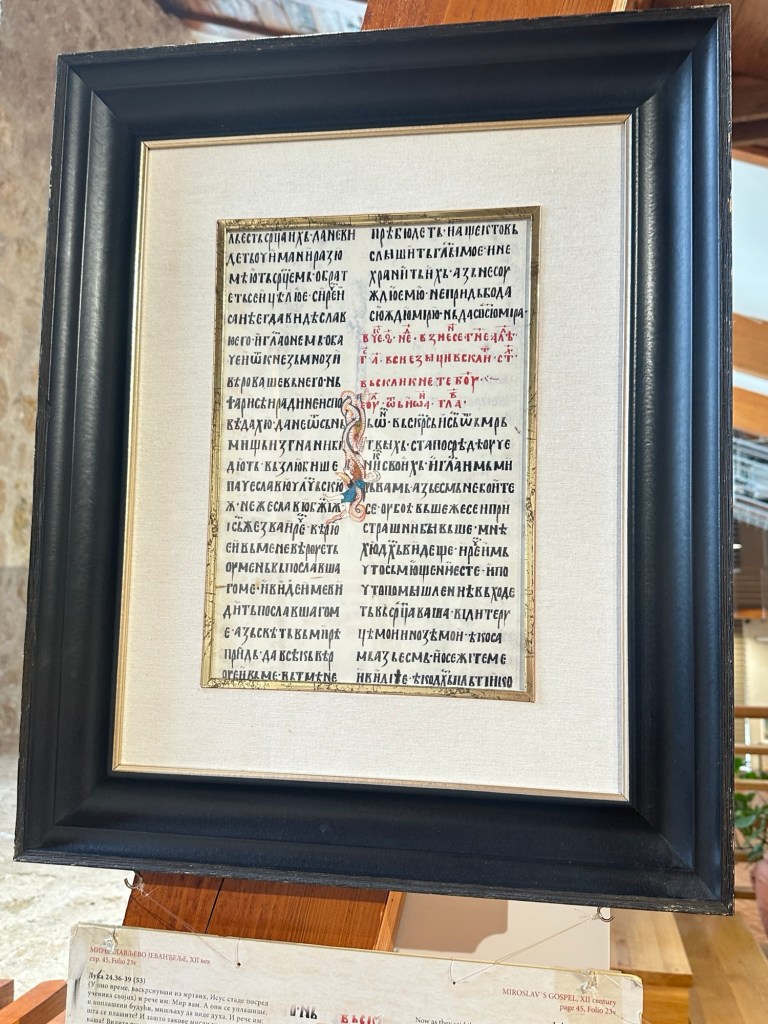
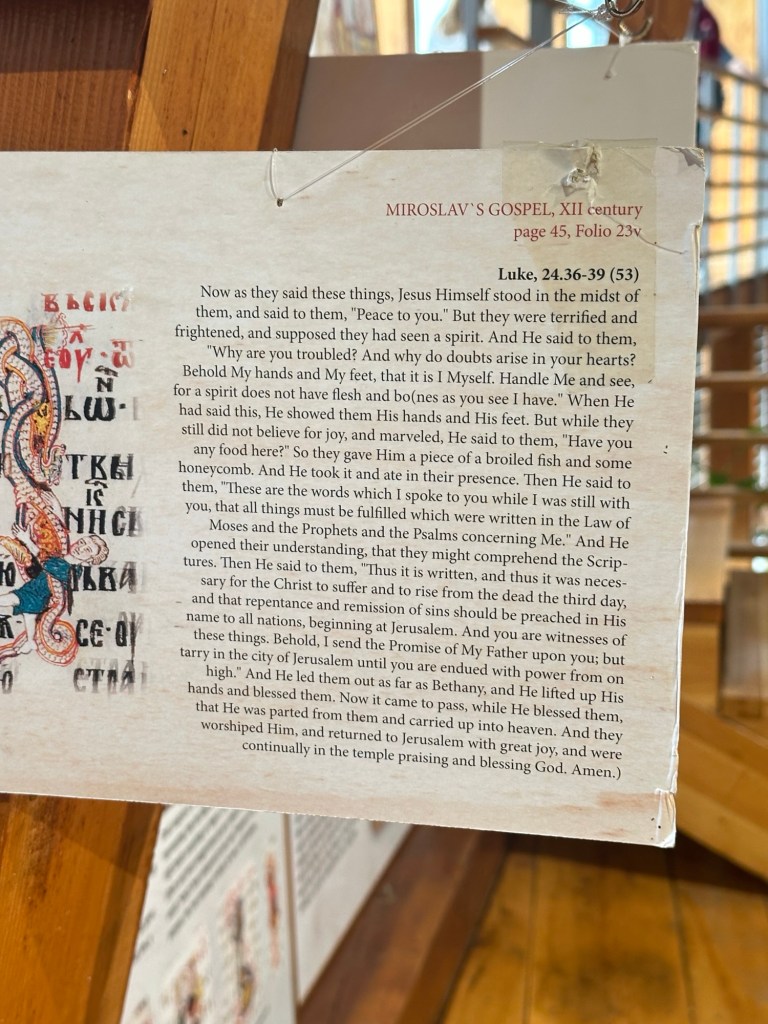
One item I found in the museum really intrigued me. It is a page from a 12th century manuscript of Luke 24:36-39. I’m including a photo of the framed manuscript page and the translation.
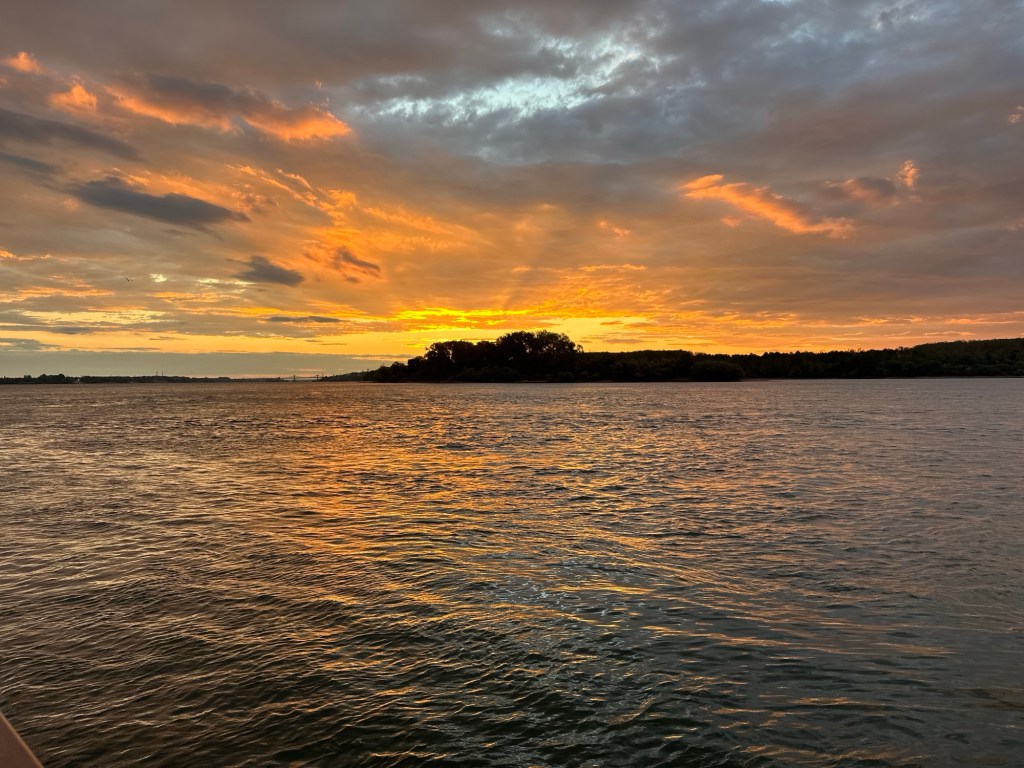
Writing from our balcony just after a beautiful September 1, sunrise.
I am now caught up! Yea! Our new adventure begins in 30 minutes. Just time enough to do one more proofread. Enjoy!
Ellen
 Ellen’s Travel Journal 2016-2025