
The Nile from Cairo to Aswan
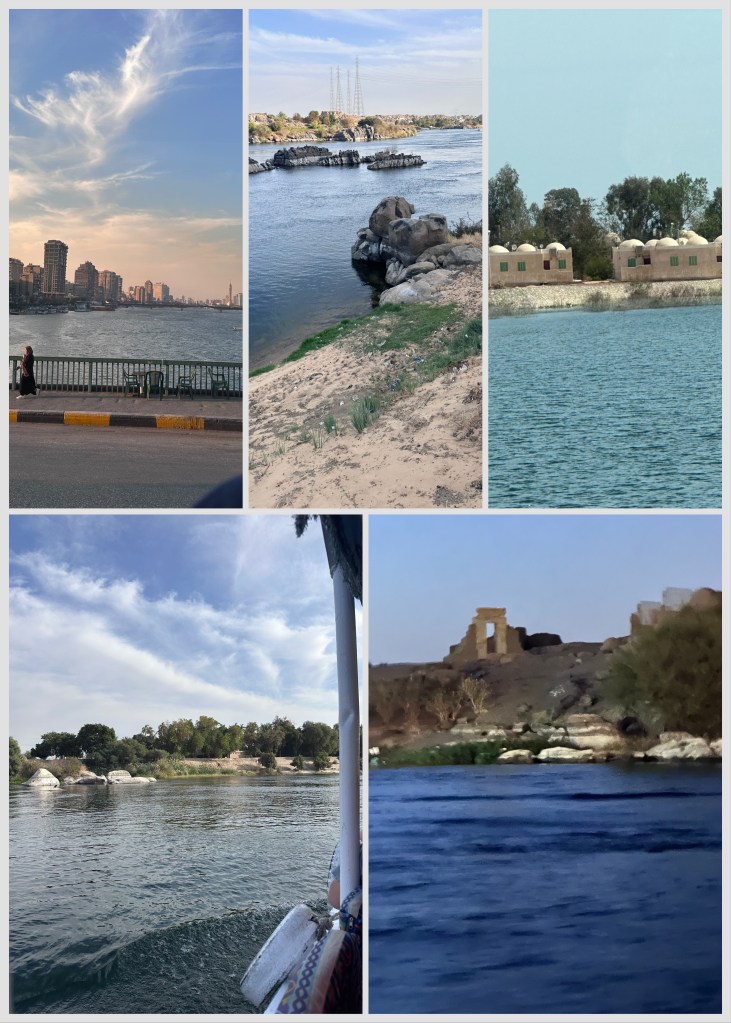
Traveling in Style on the Nile River
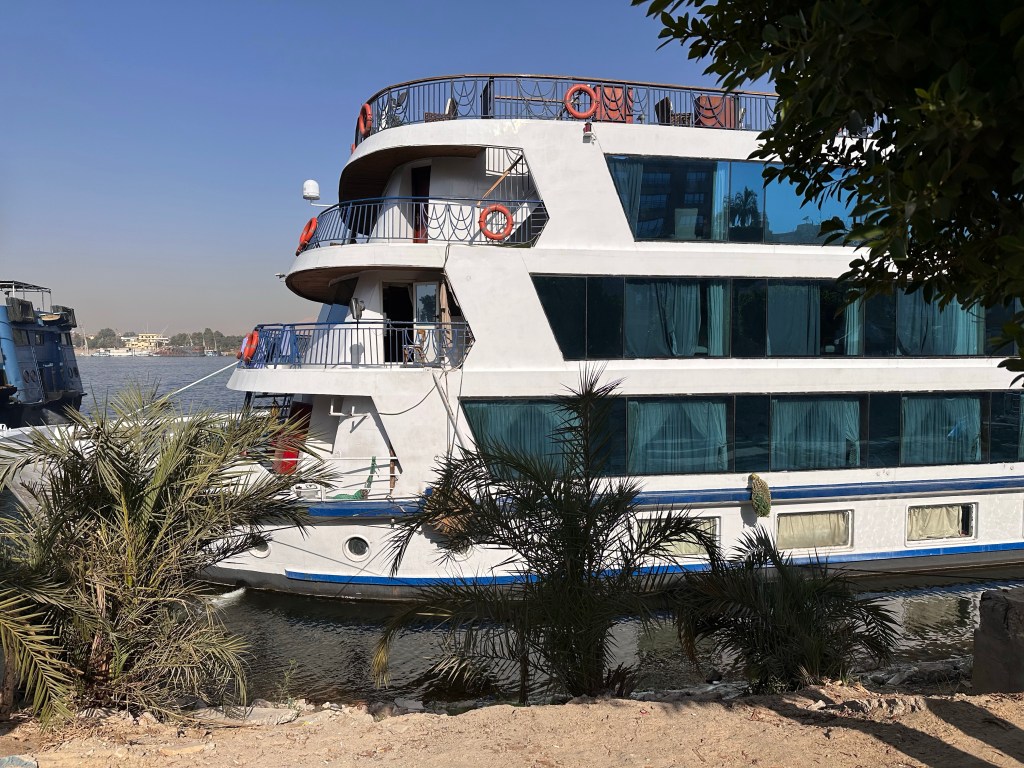
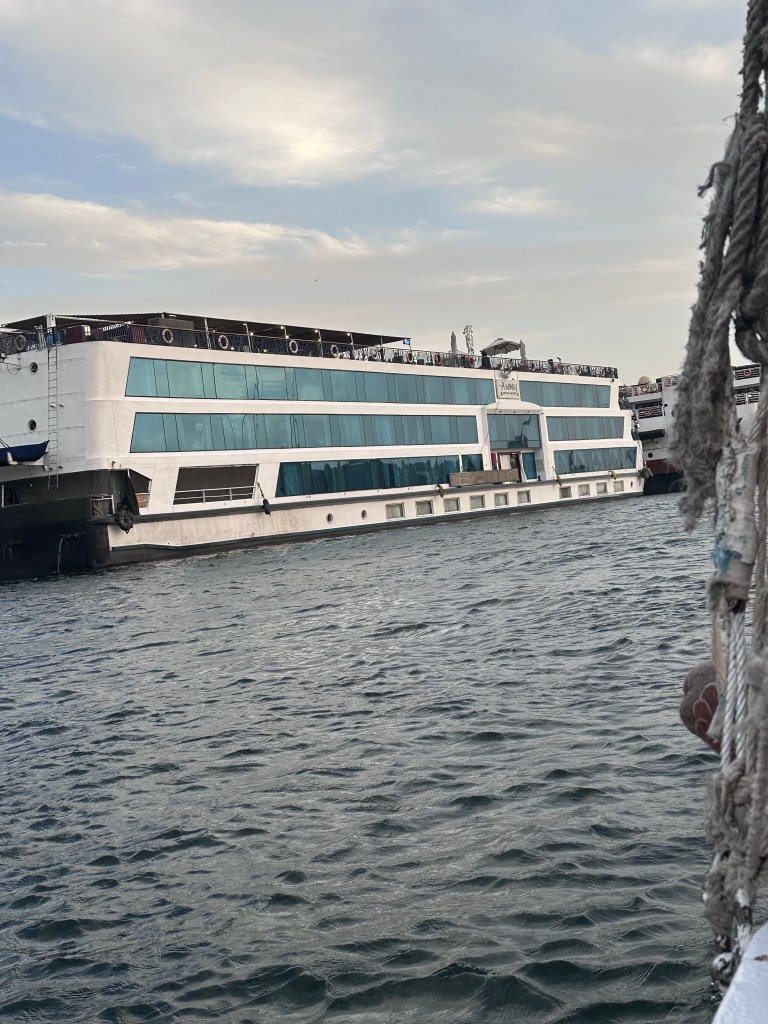
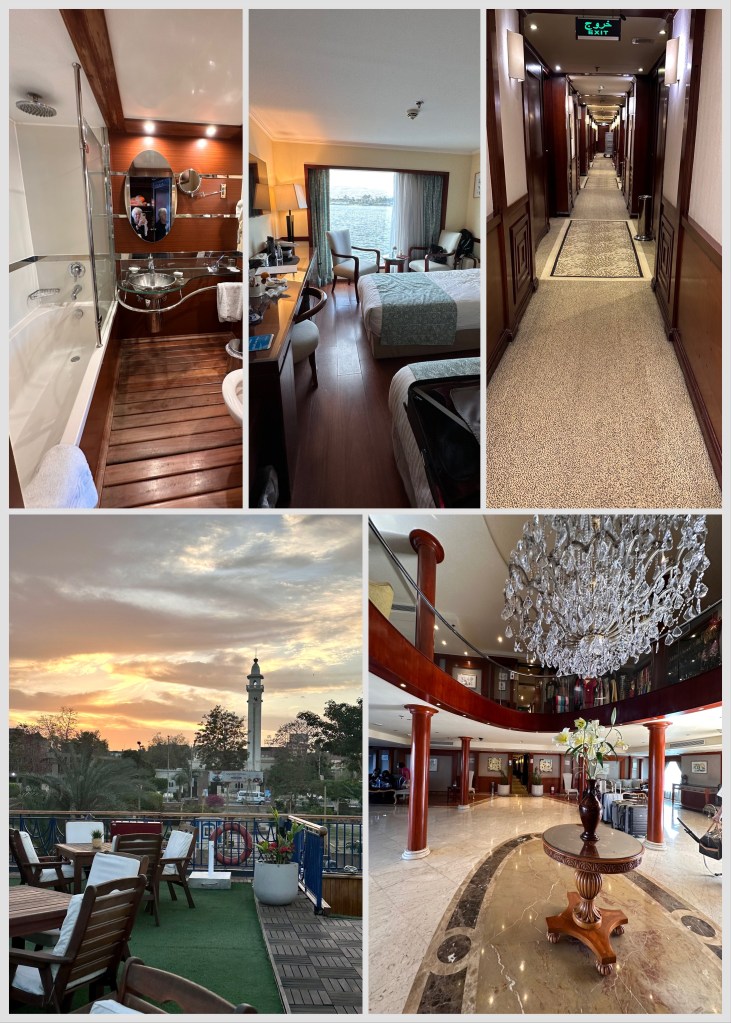
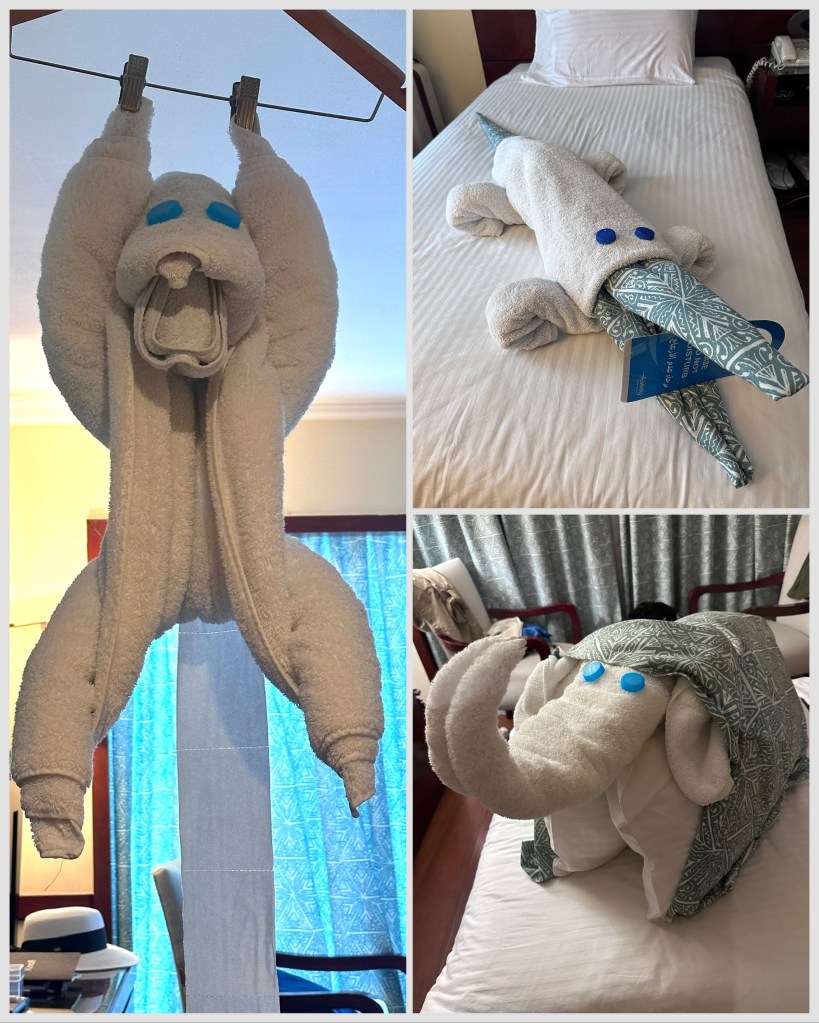
After arriving in Luxor on March 3rd, we were taken to our floating Hotel for 5 days and 4 nights on the Nile. The Amwaj River Boat was just what we needed to travel to the remote Historical sites along the Nile. I have included photos taken on our trip. Accommodations were excellent.

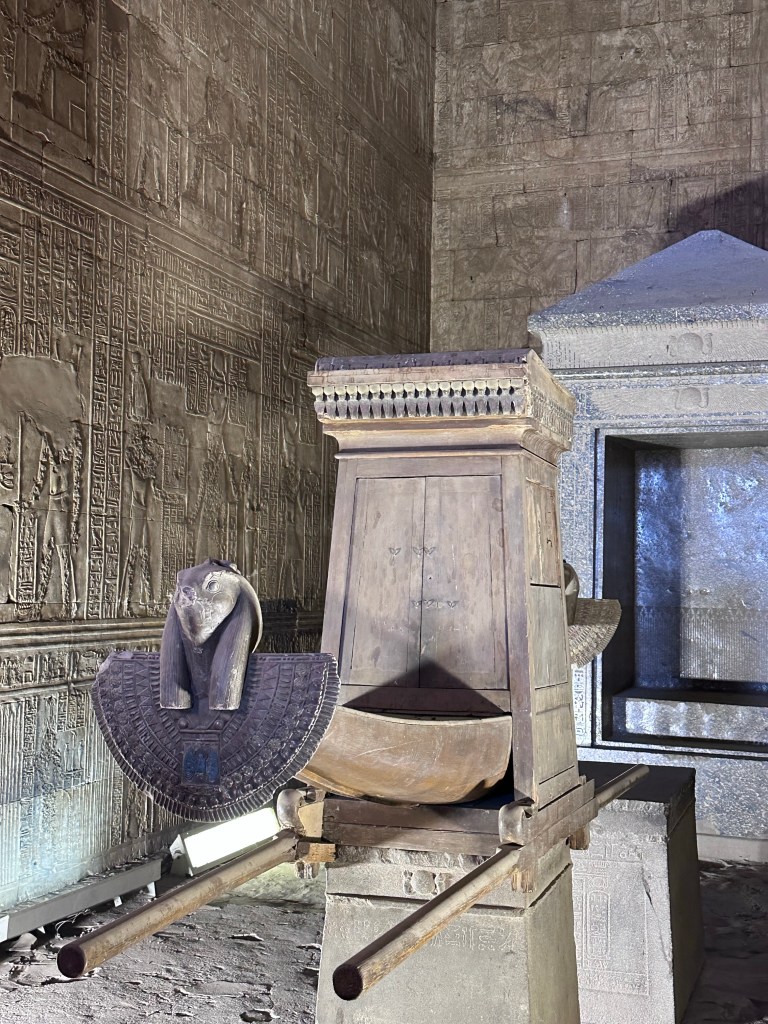
Edfu Temple
Our trip down the Nile from Luxor to Aswan by riverboat, enabled us to visit three Ptolomatic temples, Edfu, Kom Ombo and Philea in Aswan. From the reign of Ramses III, the last Egyptian Pharaoh, there were 10 dynasties of Libyan rulers, two from Kush and Persia before 332 BC with the entrance of Alexander the Great. (All information is from lecture by Osmon our Nawas guide at Edfu)
When Alexander died in India, his two generals divided his kingdom with Ptolemy I taking over Egypt, Nubia, Sudan, 1/2 of Libya and Cyprus. This dynasty went through 13-14 Ptolemies and 7 Cleopatras (the name given to the king’s favorite wife) until 30 AD with the beginning of the Roman occupation and rule at the death of Cleopatra VII.
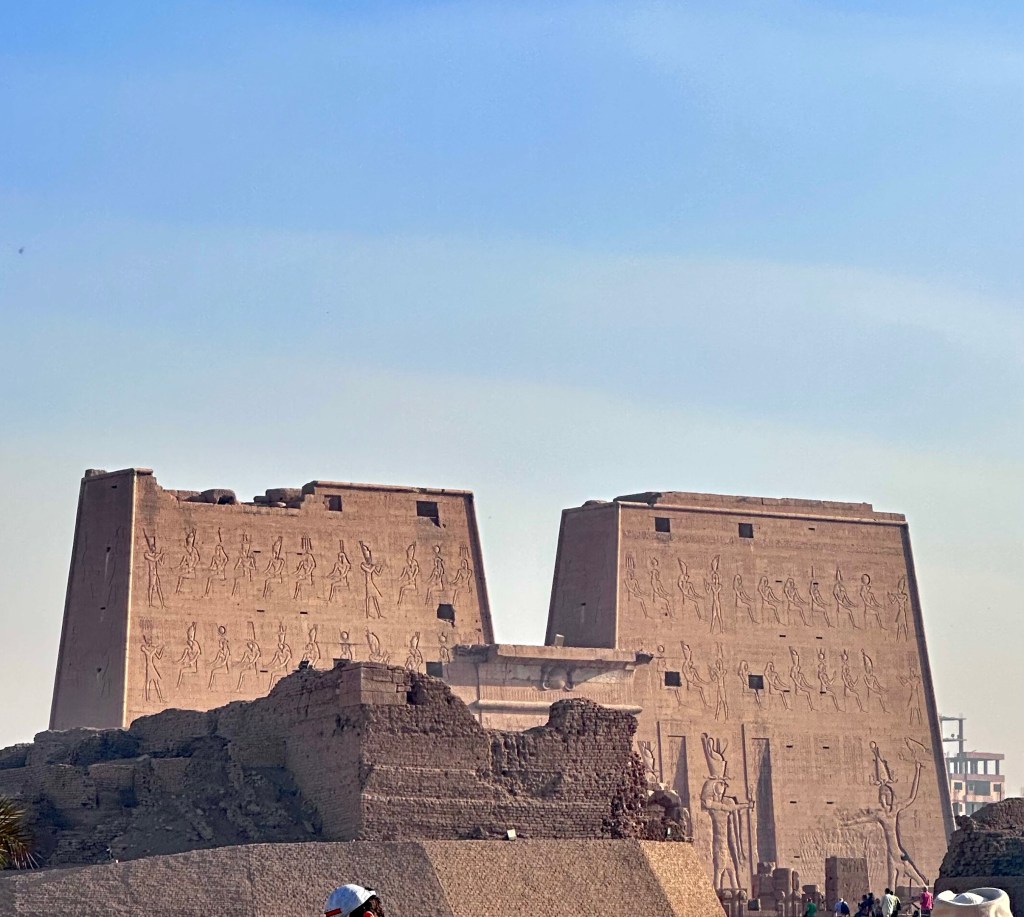
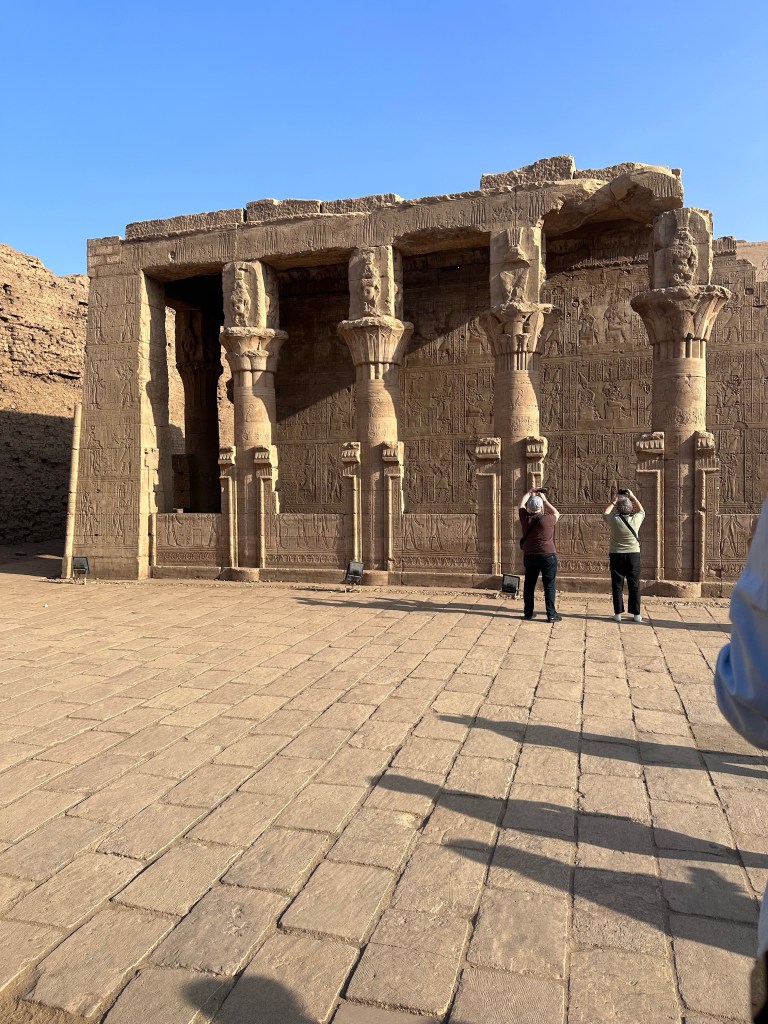
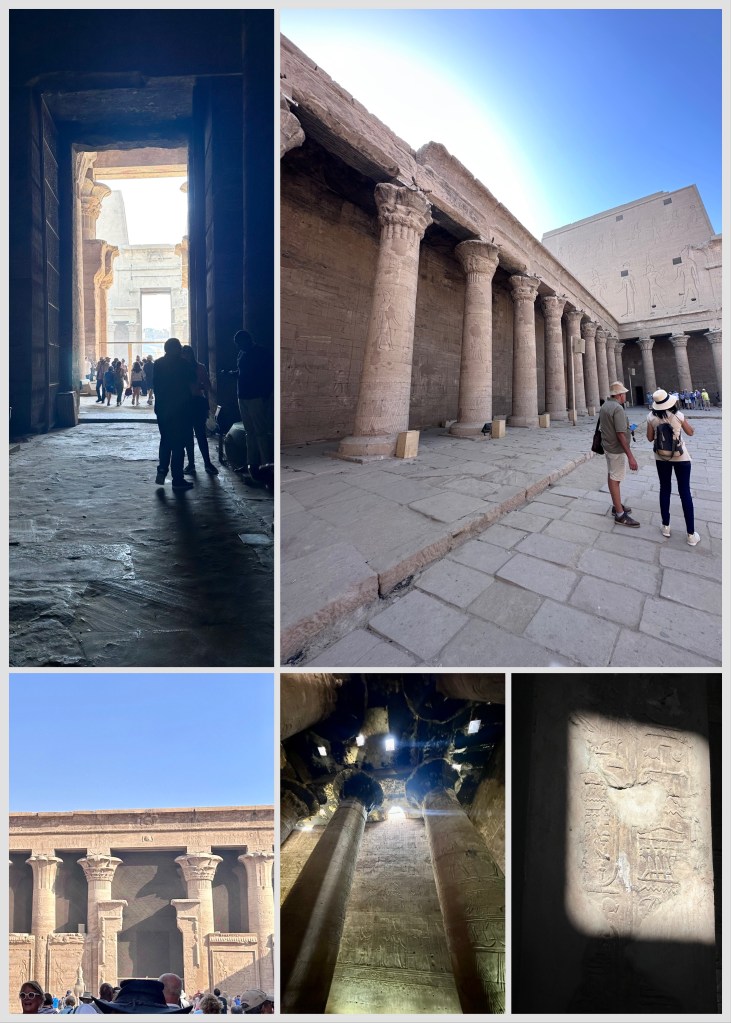
Building of this temple took 180 years, beginning in 237 BC to 57 BC. Teams of 350 workers worked 12 hour shifts, day and night, 9 days a week (Egyptian weeks were 10 days long, a month of 30 days was made up of three 10 day weeks) to complete the temple. Outside the temple the images were carved to better see them in the daylight. Inside the images were a relief carved out of the gypsum plaster to better see in the dark.
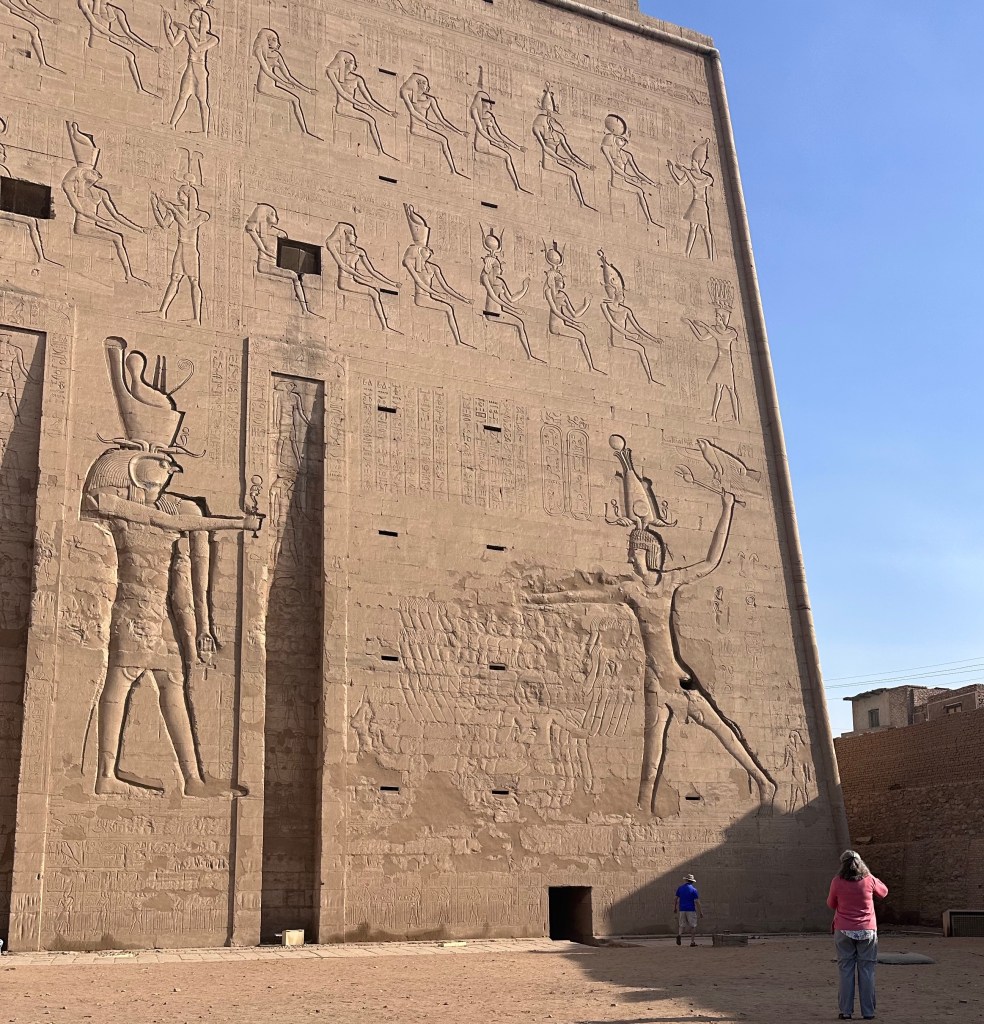
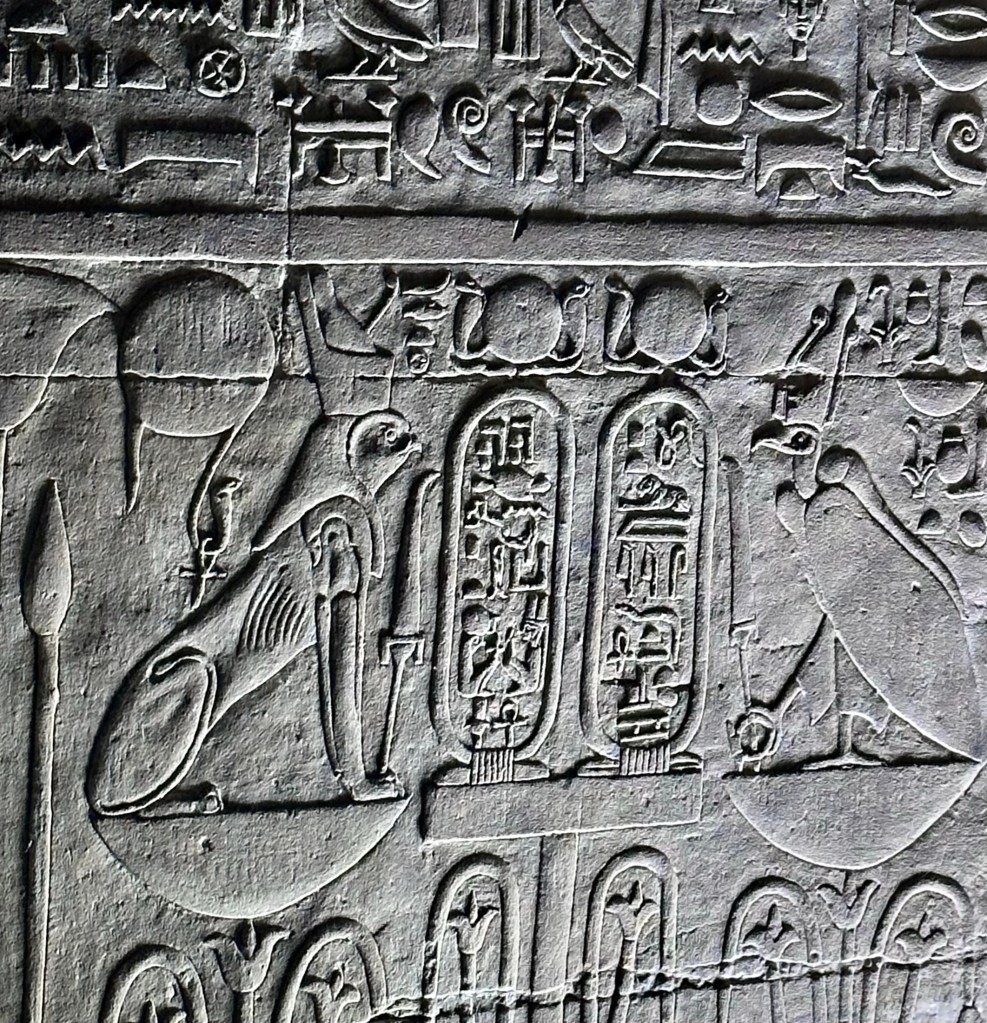
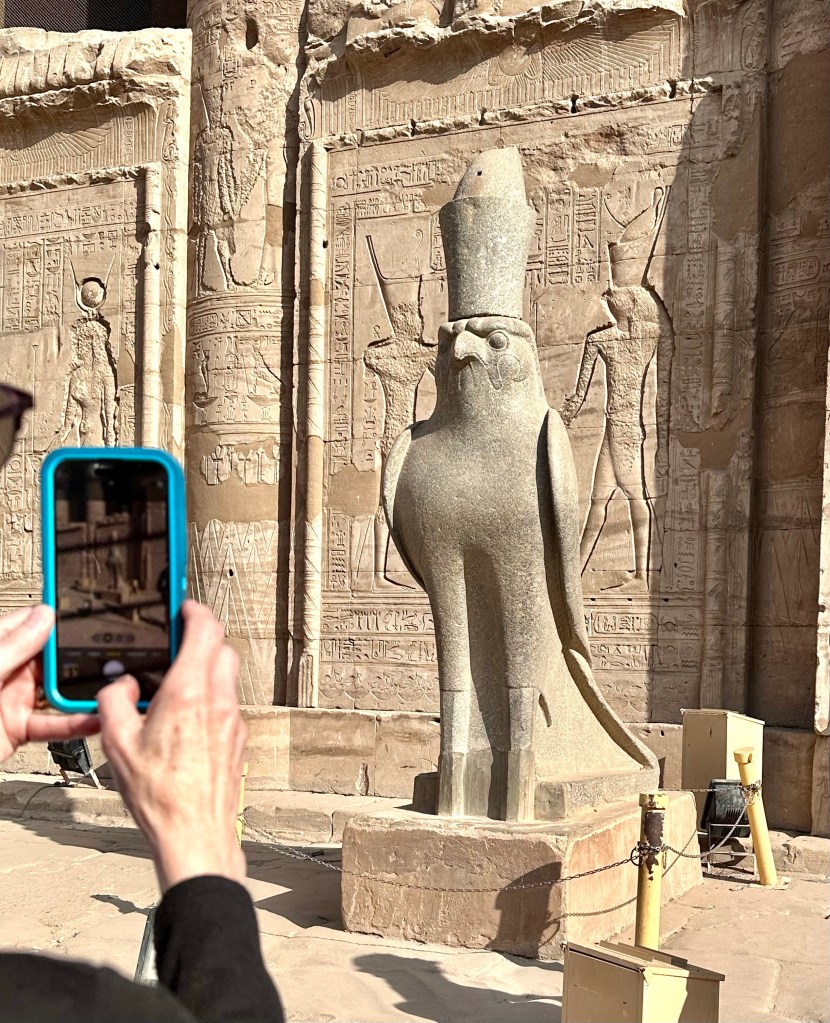
This temple is the best preserved in Egypt as it was covered with sand almost to the top of the entrance pylons until the 19th Century AD when rediscovered by the French explorer and Egyptologist, Auguste Mariette.
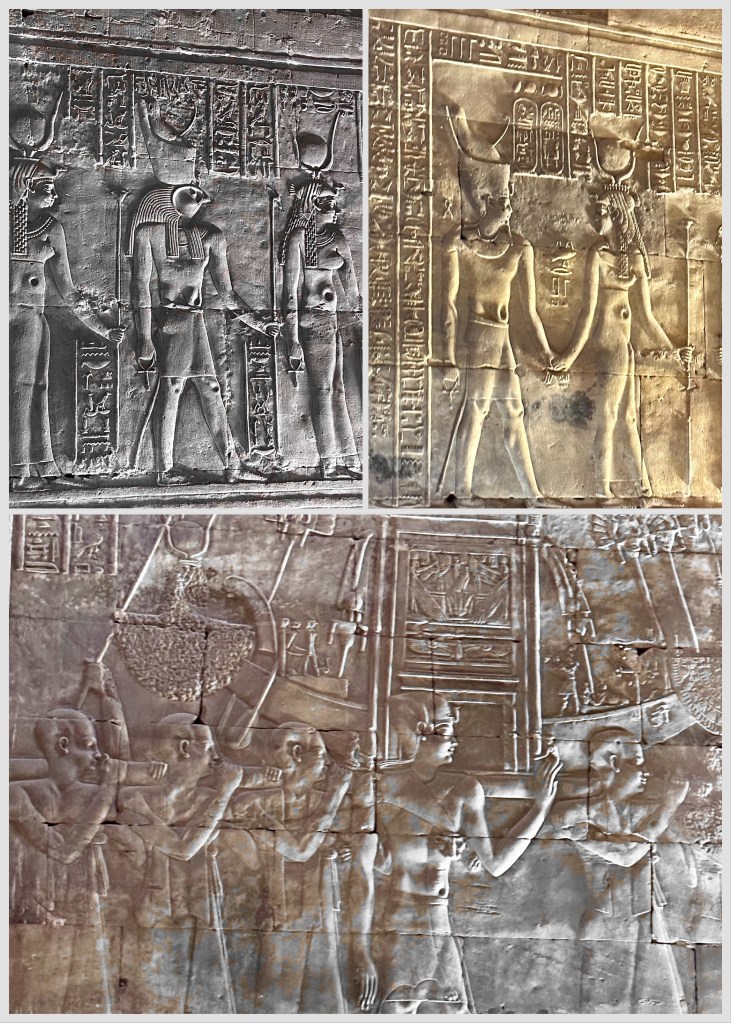
Kom Ombo Temple
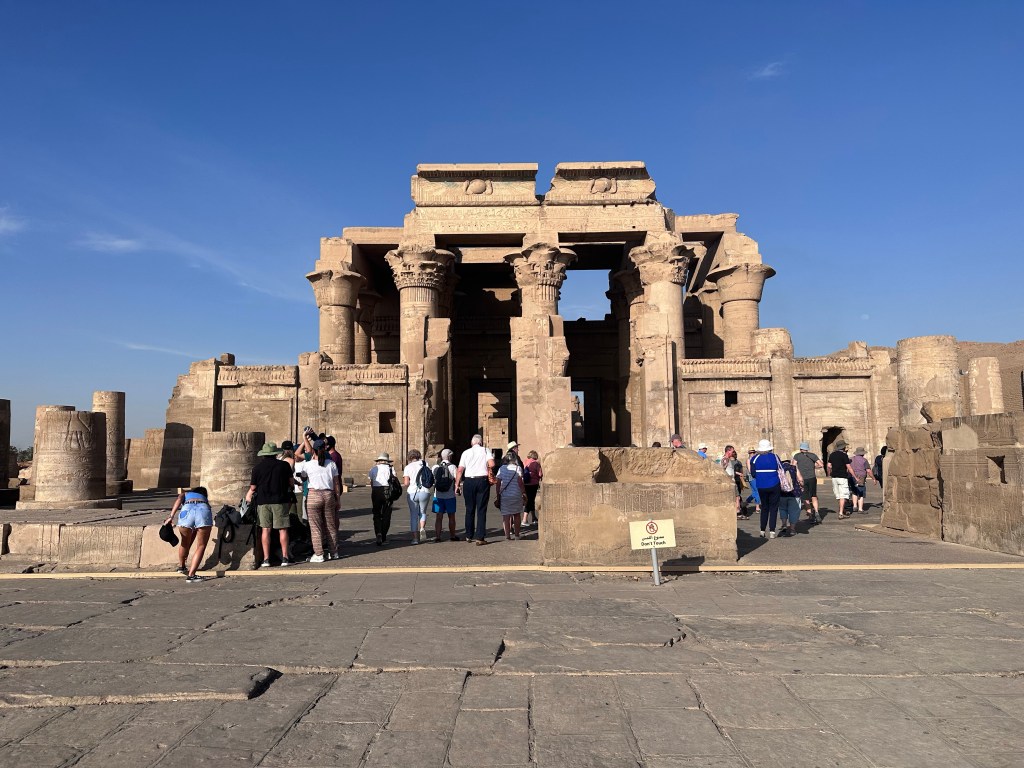
As we travel from Edfu toward Aswan, we stop at Kom Ombo. This temple was constructed from 180-47 BC by the Ptolemy VI and his wife/sister Cleopatra II (180-145) BC.
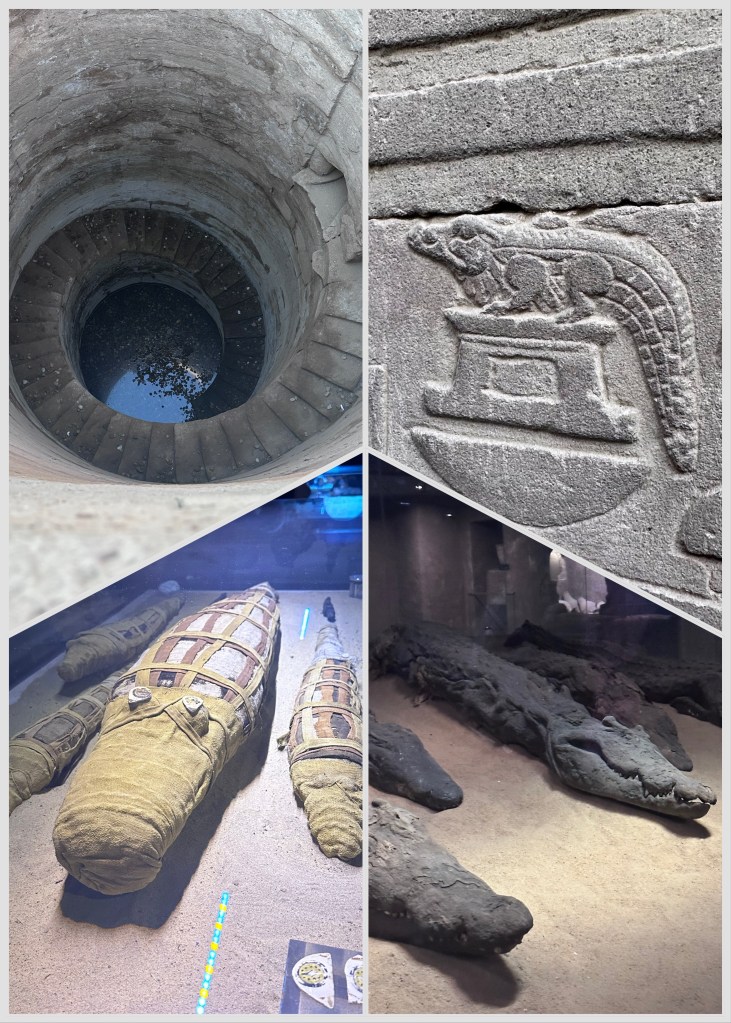
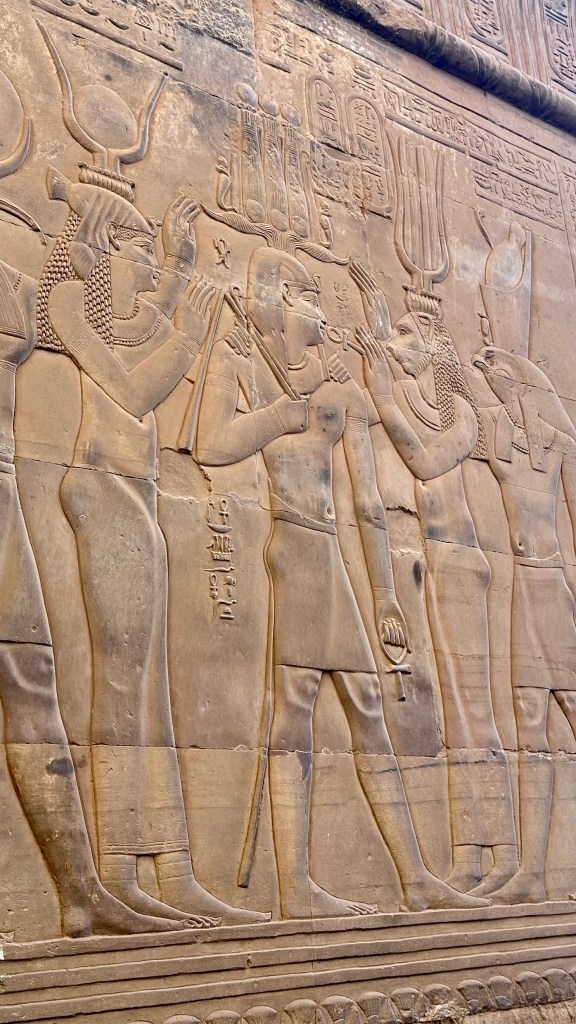
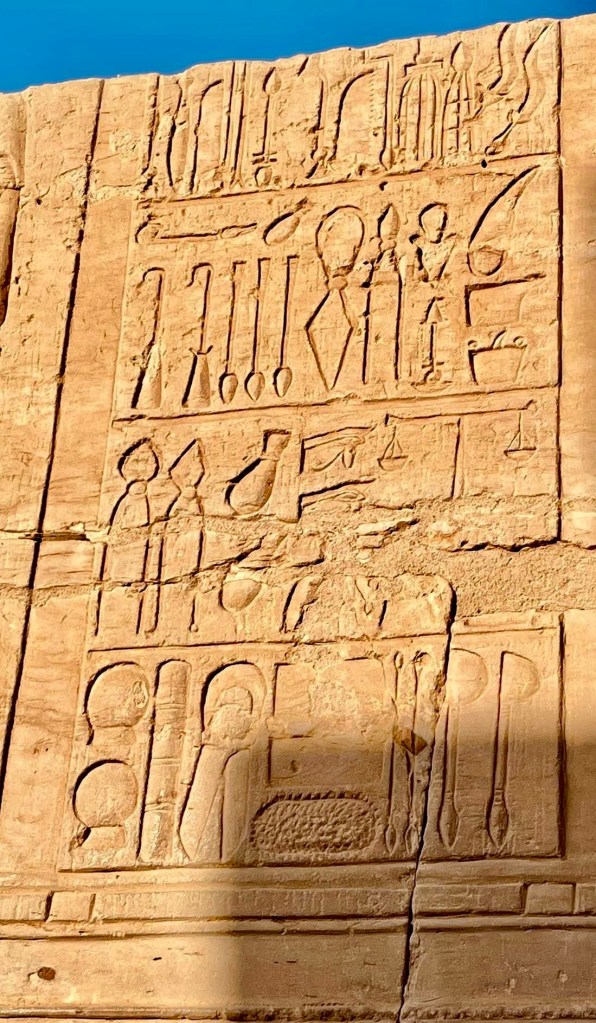
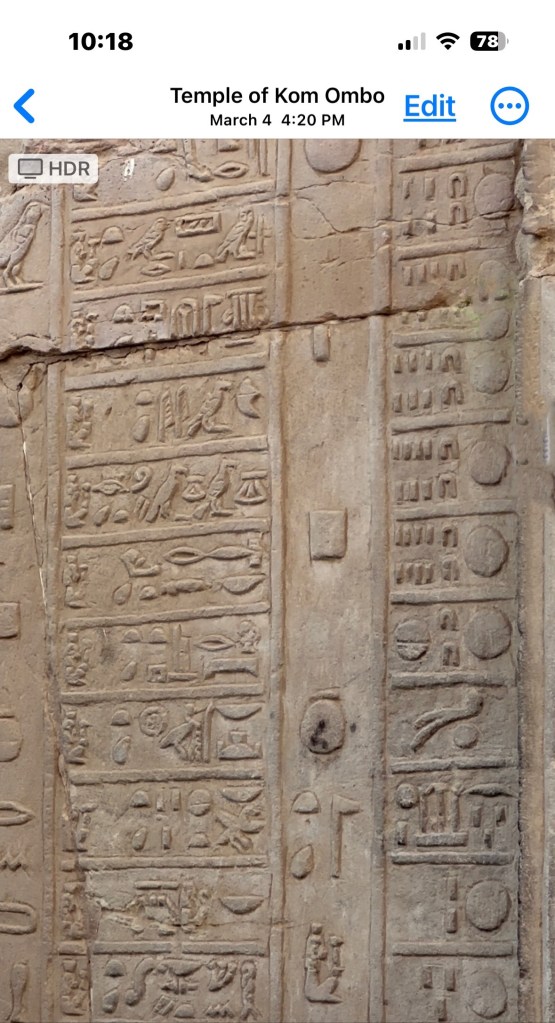
All of the ancient temples had a dual use. Temples were used as hospitals and schools. (Karnak was the school at the time of Moses). One rare engraved image from Kom Ombo below shows medical implements used for surgery. There is also a calendar that could be used to teach the months and counting.
Philea Temple
Of these three temples along the Nile, Philea Temple Complex is the oldest and has an interesting current history. Build originally on Philea Island, it was build on foundations of earlier temples. This temple complex was started around 600 BC, under the direction of Necho II, but the finished temple dates to 280 BC to the Roman era of 117 AD. The island was considered the southern boundary of the Pharaohs with a large garrison stationed there to protect Egypt’s southern border at the first cataract.
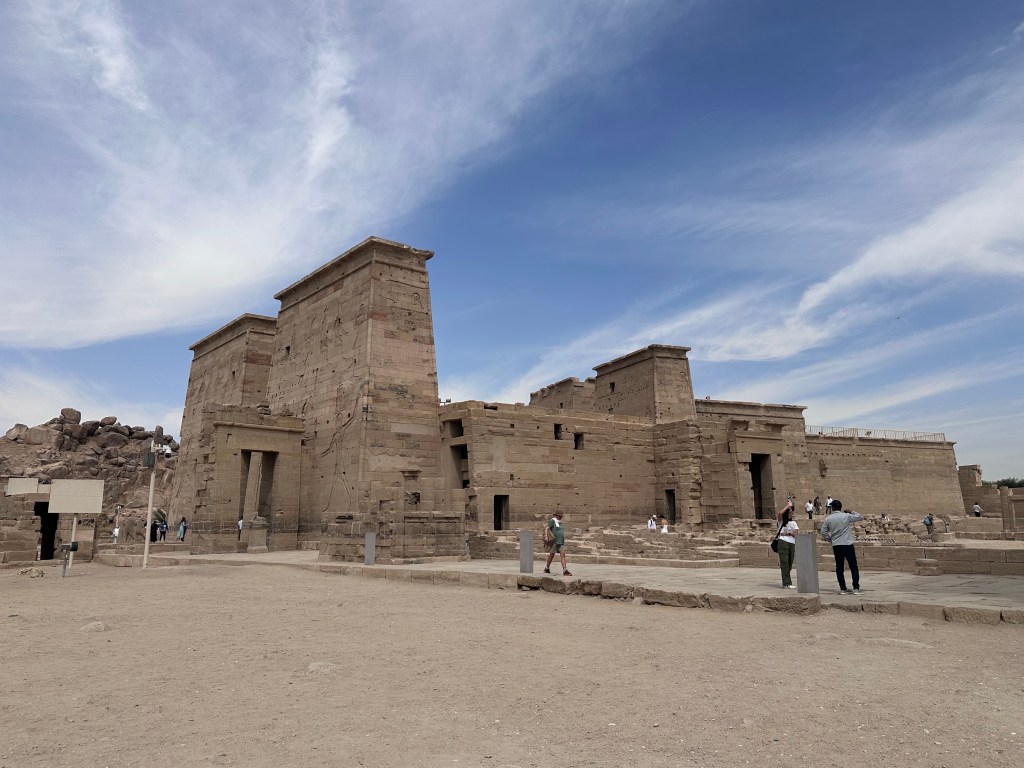
To protect the area temples from being covered with water after the completed construction of the High Dam in the 1960’s the 50,000 large blocks of this complex were moved to a higher and nearby island. Another temple in this area was the Temple of Dendur which was given to the United States for its financial help in this project (including Abu Simbel). This temple is now housed in a special wing of the Metropolitan Museum of Art in Manhattan.
Roman Rulers also saw this as their southern border and build the temple below and housed a large garrison in the area.
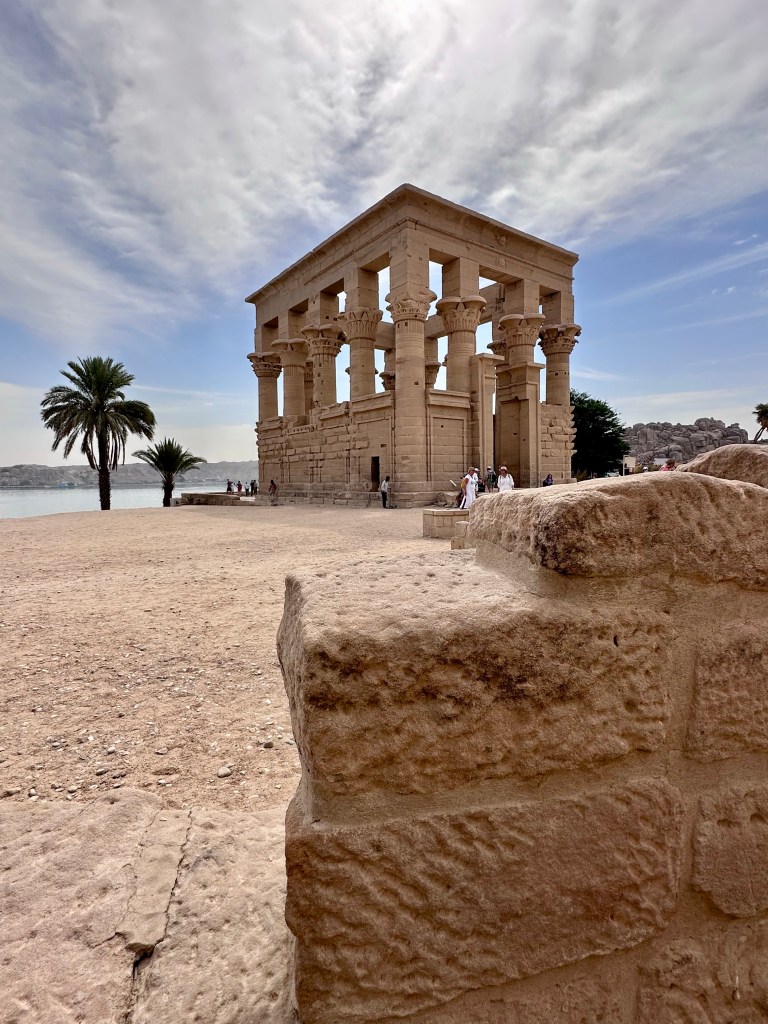
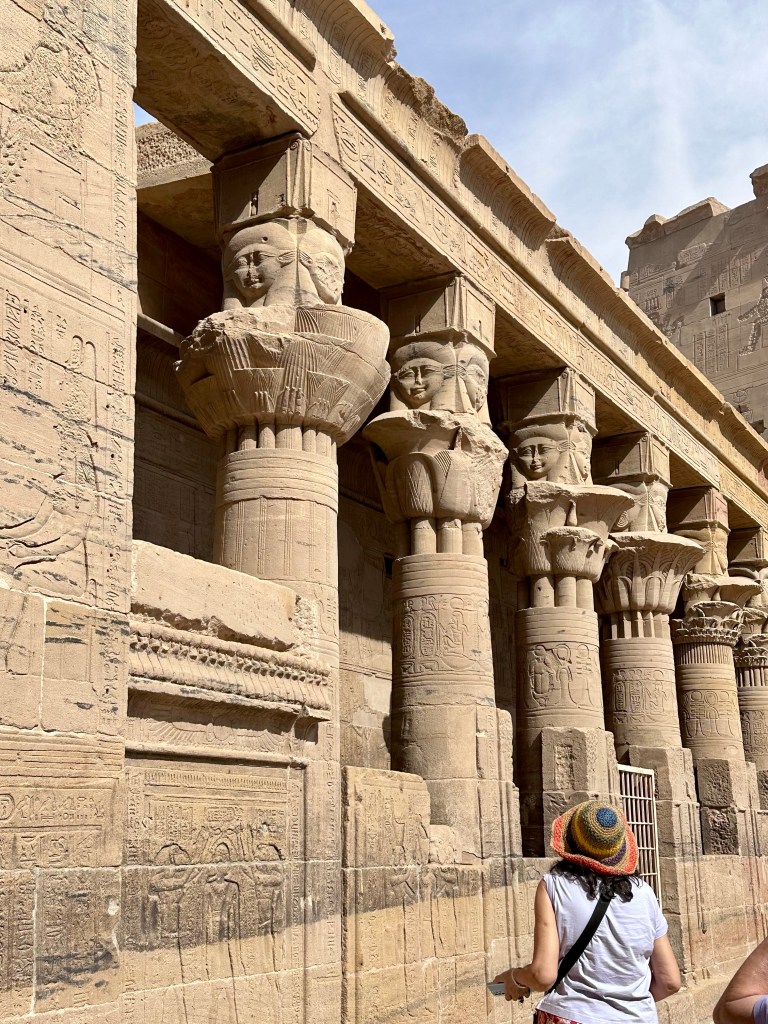
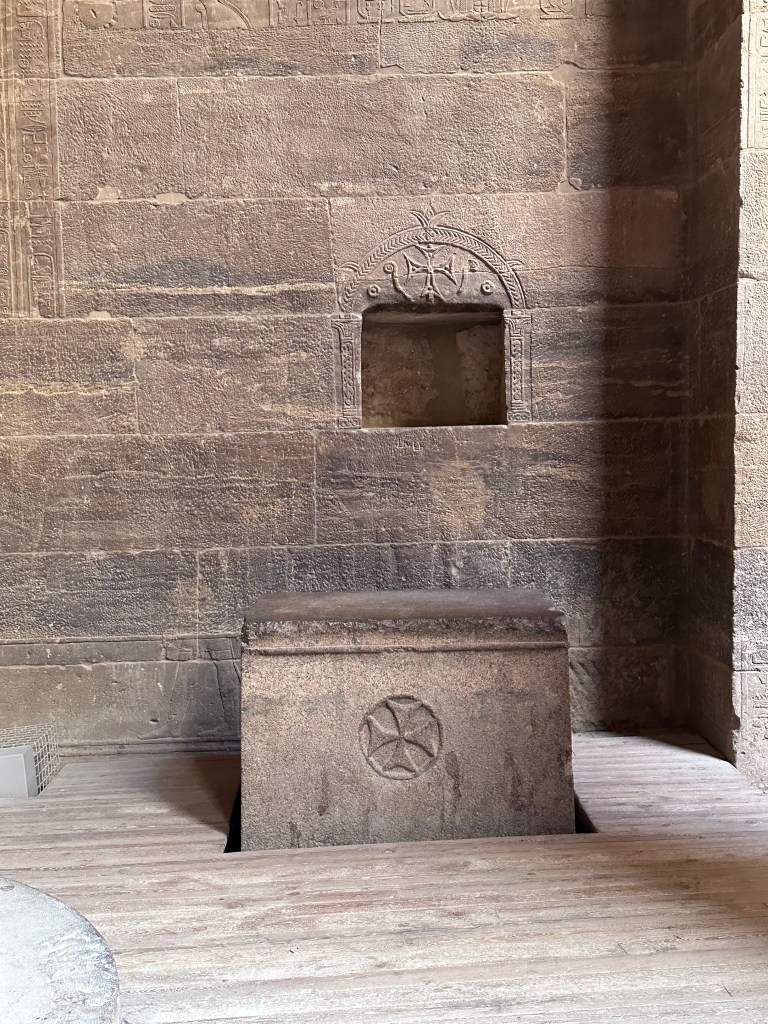
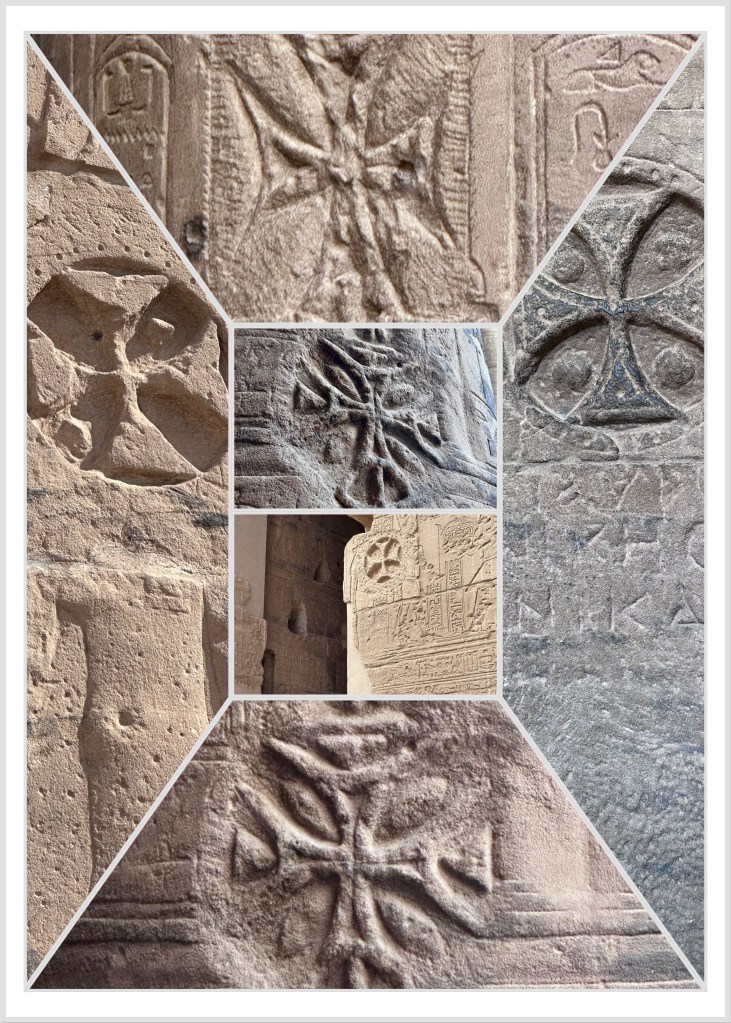
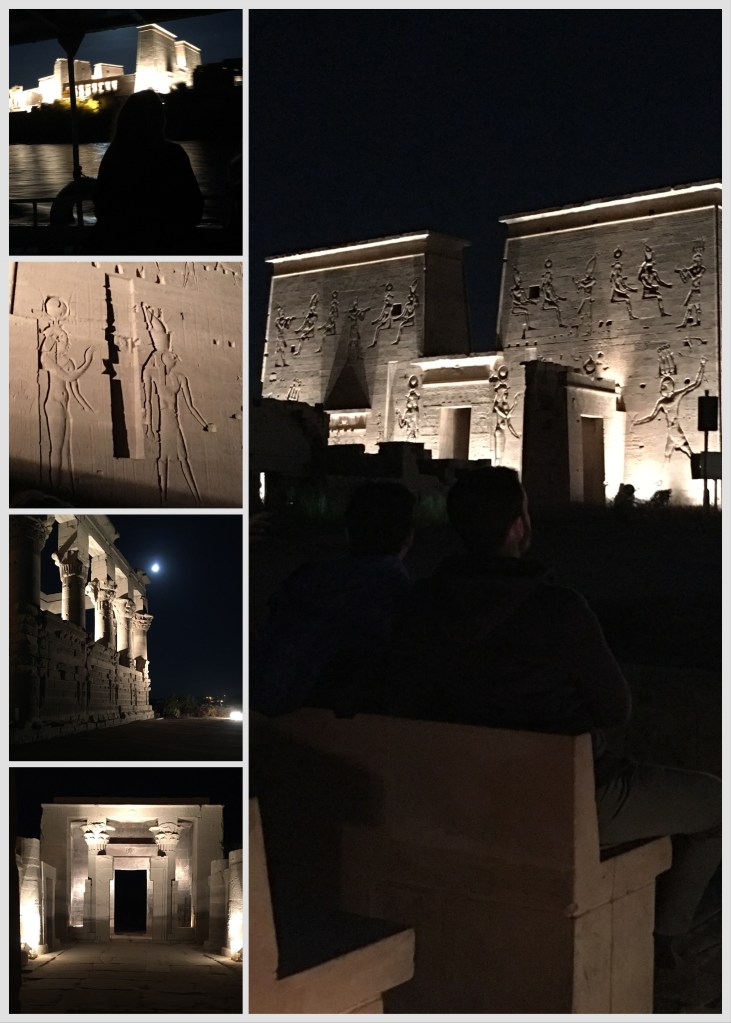
While I did visit Philea Temple in 2019, it was for a light show at night and since the narrator gave the information in several languages, I did not appreciate the beauty of this Complex of temples.
My hope is that you can see the beauty of this country and will plan your own trip here soon.

 Ellen’s Travel Journal 2016-2025
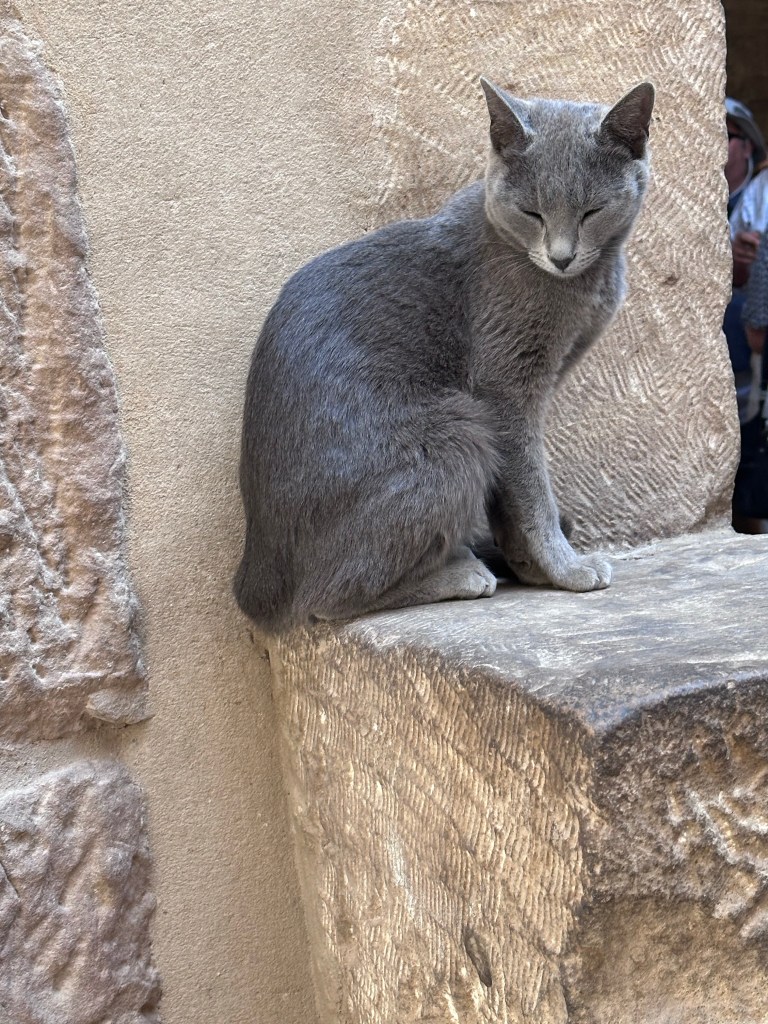
Incredible journey, the temple cat was my favorite!
LikeLiked by 1 person